


Top reasons car salespeople lose deals: weak trust-building, poor objection handling, and zero call tracking. Fix these gaps and close more sales.
You're losing deals that should be yours. Not because you're bad at your job, but because there's a gap between what you're doing and what actually moves customers from "just browsing" to signing the paperwork.
Honest take: AutomanageVM keeps showing up in our research, and for good reason.
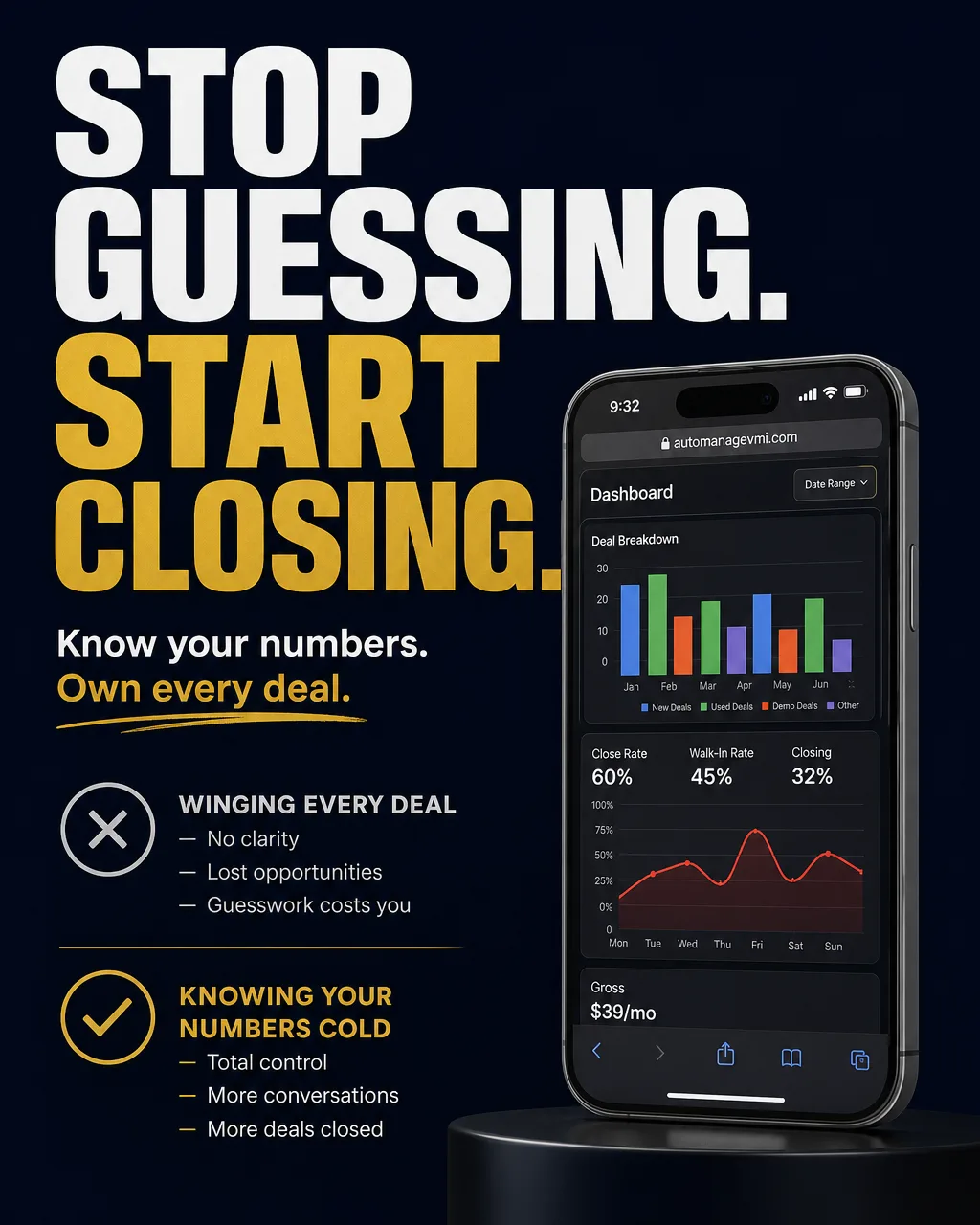
Here's the hard truth: most underperforming car salespeople aren't missing talent or effort. They're missing a system. They're missing feedback. And they're missing visibility into the exact moments when conversations fall apart.
Related: Why New Car Salespeople Fail (And How to Fix It)
If you're ready to close more deals and stop leaving money on the table, this breakdown will show you exactly what's holding you back and how to fix it.
In this article
The Trust Gap: You're Selling Before You've Built Value
Walk into a customer's life mid-conversation and you're already behind.
Underperforming salespeople jump straight to pricing, payments, and inventory. They position themselves as order-takers instead of advisors. And the moment you do that, your customer's guard goes up. They start negotiating against you instead of working with you.
What separates closers from average performers is simple: they build trust before they build a deal. They ask discovery questions. They listen more than they talk. They position themselves as someone who actually understands the customer's situation, not just someone who wants to hit quota.
Think about the last deal that fell apart. Odds are good the customer wasn't emotionally invested yet. You hadn't established yourself as the expert. So when price came up, there was nothing anchoring them to you.
The fix starts with a consultative approach. Ask about their current vehicle, their pain points with it, their timeline, and their financial comfort zone before you ever mention the car you're trying to sell. Position yourself as a knowledgeable advisor, not a transactional seller. When the customer sees you as someone solving their problem rather than moving inventory, objections soften and closing becomes natural.
The Pricing Presentation Problem
Throwing one number at a customer is a dead strategy.
Underperforming salespeople present price as a take-it-or-leave-it fact. Accomplished closers present pricing strategically with multiple structured options. You should always have three payment scenarios ready, each framed with confidence and clarity.
Why three? Because it gives your customer control while keeping you in control of the conversation. One option feels like a demand. Two options feel like a guess. Three options feel like a professional recommendation. One might emphasize down payment size, another might highlight monthly payment affordability, and a third might show long-term value. Your customer picks the one that fits their reality, and you've just made the sale feel inevitable instead of risky.
But here's what stops most underperforming salespeople cold: they don't know their customer's actual financial position. They don't know if that customer can comfortably put down $3,000 or if they're stretching. They haven't asked the right questions to uncover what monthly payment range feels manageable. So they guess. And guessing costs you deals.
Objection Handling: Where You Lose Control
Every objection is a chance to strengthen your position or lose the deal.
"The payment's too high." "I want to think about it." "I need to talk to my spouse." "I saw a better price online." These aren't showstoppers. They're redirects. But underperforming salespeople treat them like deal-enders. They get defensive, they back down, or they let the customer walk away thinking, "I'll call you back." (Spoiler: they won't.)
Accomplished closers use objections to dig deeper. When a customer says the payment's too high, they don't immediately lower the price. They ask clarifying questions. "What would feel right to you monthly?" "Is it the payment itself, or the total amount we're financing?" "What if we could adjust the down payment to bring that number down?" These questions give you control back. They keep the conversation moving forward instead of letting it stall. They show the customer you're problem-solving with them, not against them.
Without a structured objection-handling framework, you'll keep losing deals at the moment they matter most.
The Call Tracking Blind Spot

You can't fix what you don't measure.
Most underperforming salespeople have zero visibility into their own performance. They don't know their demo rate. They don't know how many calls convert to walk-ins. They don't know which objections are happening most frequently or which customers are buying vs. vanishing.
This is the biggest hidden advantage successful salespeople have over struggling ones. They know exactly where they're losing customers. And because they know, they can fix it.
Related: Best Sales Tools for Struggling Car Salespeople 2026: Top 5 Ranked
According to research from sales analytics experts at industry publications, salespeople who track call performance and analyze failure patterns close 30-40% more deals than those who don't.
You need visibility into:
- How many prospects you're talking to daily
- Your demo rate (walk-ins as a percentage of calls)
- Your write-up rate (demos that turn into actual sales presentations)
- Your close rate (write-ups that become deals)
- Where conversations are breaking down
Without these numbers, you're flying blind. With them, you can identify the exact point in your process that needs work.
Information Control: Stop Revealing Your Weakness
Customers are smarter about negotiating than they used to be.
Underperforming salespeople volunteer information that works against them. They mention trade-in urgency. They reveal budget caps. They telegraph financial weakness. They let customers know they have pre-arranged financing lined up before establishing the true value of the deal.
Every piece of information a customer has is leverage they can use against you. Your job is to control the flow of information, not dump it all at once.
Expert closers reveal information strategically. They ask questions first, listen for clues about financial readiness and motivation, and only share pricing, terms, and options once they've built enough trust to position the deal as mutually beneficial instead of adversarial.
When you let a customer know you're desperate to move inventory, or when you accidentally reveal they're financing the entire purchase, you've just handed them your negotiating power.
How to Close the Gap Right Now
The gap between underperforming and accomplished isn't talent. It's process, feedback, and accountability.
You need a system that helps you:
- Track your own metrics daily (demo rate, write-ups, closing percentage)
- Record and review your own calls so you can hear where conversations fall apart
- Get real feedback on your sales approach from someone who understands automotive
- Build a repeatable playbook instead of winging it on every customer
That's exactly what AutomanageVM is designed to do for individual salespeople like you. It's a personal sales dashboard and coaching platform built specifically for car salespeople who want to sharpen their process, track their performance, and close more deals without waiting for dealership-wide training or hoping your manager notices you're struggling.
Looking for a vehicle or service?
Contact Us →Related: Affordable Sales Coaching for Car Salespeople in 2026
You get real-time visibility into your numbers. You get honest feedback on your calls. You get a structured framework for consultative selling, objection handling, and strategic pricing. Most importantly, you get accountability with someone in your corner who understands what it's like to be on the lot.
Your income is directly tied to your closing rate. Your career depends on it. And right now, if you're underperforming, it's probably because you're missing one of these gaps. The good news is that every single one is fixable once you know what to look for.
Start Tracking and Close More Deals

The difference between a struggling salesperson and a successful one often comes down to this: do you know why you're losing deals?
Most underperforming salespeople can't answer that question. They just know the deals aren't happening. They blame the market, the inventory, the customer, the pricing. And while those are real factors, they're not the ones you control.
What you control is your process. Your trust-building. Your objection handling. Your information flow. Your pricing presentation. And whether or not you have the data to know what's actually going wrong.
If you're ready to stop guessing and start closing, the first step is simple: get visibility into your own performance. Track your calls, know your numbers, and identify the exact moment where conversations fall apart. Then fix it.
That's how you go from underperforming to unstoppable. And tools like AutomanageVM exist specifically to help you build that system for yourself, without waiting on dealership support or expensive consulting.
What's my biggest sales gap if I'm underperforming?
The biggest gap is usually one of three things: you're not building enough trust before discussing price, you're not handling objections in a way that keeps control of the conversation, or you have zero visibility into your own metrics. Most underperforming salespeople struggle with all three. The fix is identifying which one is costing you the most deals, then working systematically to improve it.
How do I know my demo rate?
Your demo rate is the number of customers who walk onto the lot or come in for a vehicle presentation, divided by the total number of calls or leads you've contacted. If you made 100 calls and 15 people came in to see a car, your demo rate is 15%. Most successful salespeople maintain a demo rate between 20-40%, depending on their market and customer type. If yours is below 15%, your problem is probably in the initial conversation, not the closing.
Should I present one price or multiple options?
Always present three pricing options with confidence. Structure them around different priorities: down payment size, monthly payment affordability, and total value. This gives your customer the feeling of control while keeping you in control of the negotiation. One number feels like a demand. Three options feel like professional expertise.
How do I know if a customer is actually ready to buy?
Ask the right discovery questions early. Can they put down at least $3,000? Do they have a trade-in? Is their timeline weeks or months? Have they been pre-approved for financing? These aren't pushy questions; they're professional qualifying questions. A customer who can confidently answer all four is dramatically more likely to buy than one who hesitates or changes the subject.
Looking for a vehicle or service?
Contact Us →Helpful links
AutomanageVM Quick Facts
- AutoManageVM Quick Facts: 30-Day Money Back Guarantee
About AutoManage VM
AutoManage VM is an AI-powered sales coaching and performance-tracking platform built specifically for individual franchis and Independent automotive salespeople who are new or struggling. Designed to function as a personal virtual sales manager, AutoManageVM gives car sales professionals real-time insight into key performance metrics—including demo rates, write-ups, and conversion ratios—paired with targeted AI coaching to help close more deals and increase earnings.