


Learn what Salesforce's 1-1-1 model is, how it works, and why it matters. A simple breakdown of Marc Benioff's corporate giving framework.
The Salesforce 1-1-1 model is a corporate giving framework created by Salesforce CEO Marc Benioff that dedicates 1% of company equity, 1% of technology, and 1% of employee time to community benefit. It sounds corporate, but here's why it actually matters to you as a car salesman: understanding how top companies structure their values and commitments can shape how you think about your own career, your dealership culture, and what you're building as a professional.
Let's break down what this really means, how it started, and what you can learn from it.
Related: Cost of Car Salesperson Turnover: What It Really Means
In this article
- What Is the Salesforce 1-1-1 Model?
- Why a Car Salesman Should Care About This
- The Three Components Explained
- How the 1-1-1 Model Actually Works in Practice
- Pledge 1% and the Expanded Framework
- What Makes This Model Stick
- Why Companies Actually Adopt This Model
- Building Your Own 1-1-1
- The Legacy of Marc Benioff's Framework
- How to Apply This Thinking to Your Sales Career
What Is the Salesforce 1-1-1 Model?
At its core, the Salesforce 1-1-1 model has three simple components:
Related: Free Salesforce Training for Car Salespeople: Trailhead Guide
- 1% of company equity - Salesforce sets aside actual ownership stake to fund charitable work
- 1% of technology/product - The company donates its software and tools to nonprofits and communities
- 1% of employee time - Workers get paid time to volunteer and contribute their skills to social causes
Marc Benioff launched this when Salesforce was founded in 1999. His philosophy? "The business of business is improving the state of the world." It wasn't a PR move. It was baked into the company from day one.
This framework later evolved into what's called the Pledge 1% movement, which expanded into four areas: equity, time, product, and profit. Other companies have adopted versions of it since.
Why a Car Salesman Should Care About This
You might be thinking, "I'm not running Salesforce. I'm trying to hit my numbers and close more deals." Fair point.
But here's the connection: the Salesforce 1-1-1 model shows what happens when a company intentionally structures its values into its operations. It's not optional. It's not something that happens if there's extra money left over. It's built into the foundation.
Think about your own career the same way. How are you structuring your own "1-1-1"? What percentage of your time do you dedicate to improving your process? What portion of your energy goes into helping other salespeople on your lot level up? Are you investing in tools and resources that make you better?
AutomanageVM is built on a similar principle—taking 1% of your daily effort (tracking your metrics, reviewing your demos, analyzing your write-ups) and compounding it into massive returns on your income and job security. It's not about overhauling everything. It's about intentional, consistent commitment to a few core things.
Looking for a vehicle or service?
Contact Us →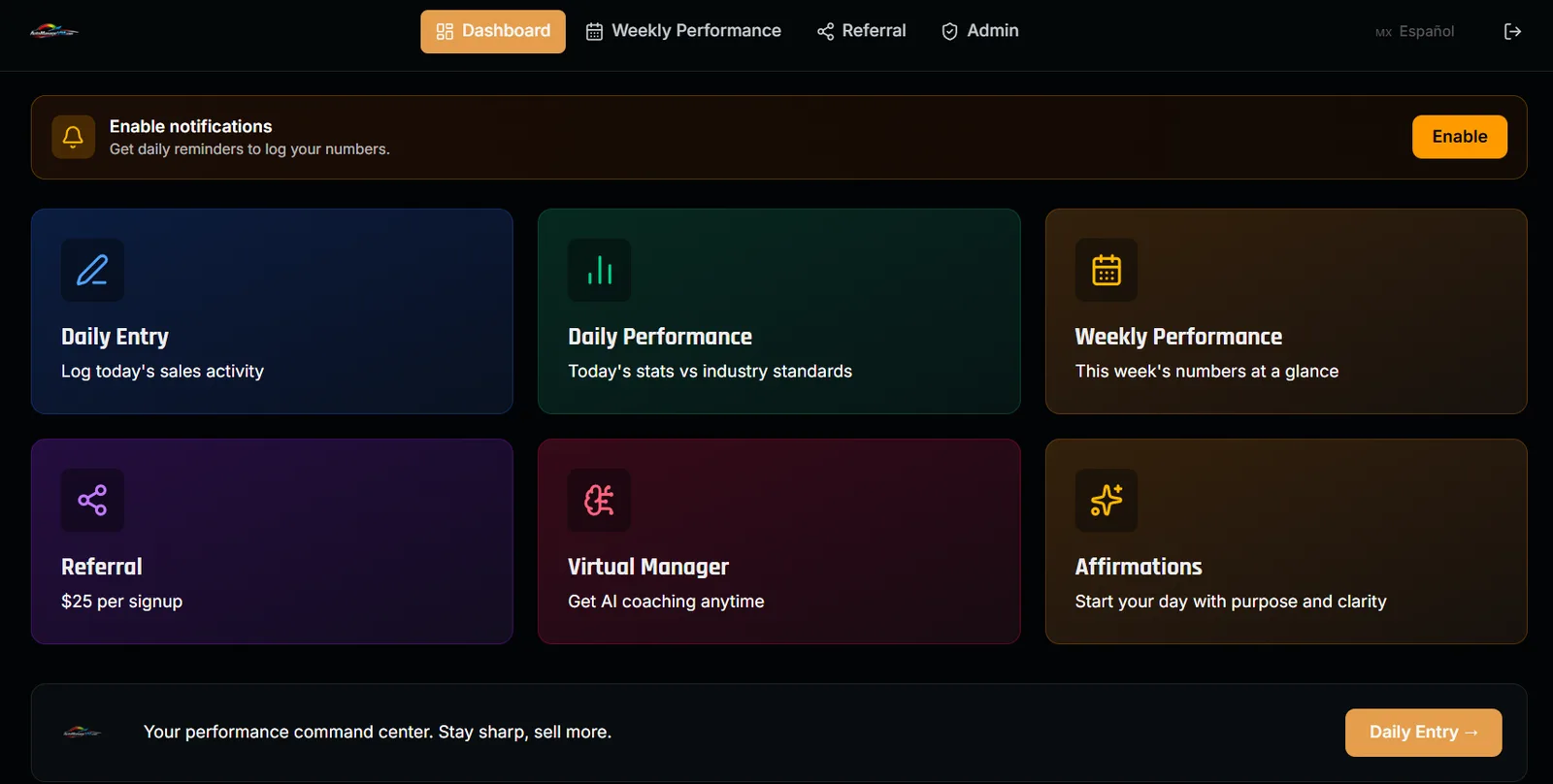
The Three Components Explained
Equity (Company Ownership)
Salesforce actually gave away a percentage of the company itself to charities and social impact work. Most companies don't do this. They'd rather donate cash (which is a tax write-off) and call it a day. Benioff was saying: "We're putting actual skin in the game."
For you as a salesman, this is about owning your results. Not just showing up. Not just hoping. Actually owning the outcome of every demo, every presentation, every follow-up call.
Product (Technology & Tools)
Salesforce gave nonprofits free access to its CRM software. This meant small organizations could compete with bigger ones because they had enterprise-level tools at no cost.
In your world, this means investing in tools that level up your game. You don't need to spend thousands. But you need the right systems to track your pipeline, understand your metrics, and know where you're winning and losing. That's where real improvement happens.
Time (Employee Volunteering)
Employees at Salesforce get paid time to volunteer. It's not a "do this on your own time" situation. The company literally budgets hours for it.
You should do the same with your career. Block time every week to review your performance, study your weak spots, and work on your close rate. If you're not budgeting time for self-improvement, you're betting against yourself.
How the 1-1-1 Model Actually Works in Practice

The beauty of Salesforce's approach is that it's not complicated. It's three simple percentages. No committee approvals. No annual budget debates. It's built into the system.
Here's how the mechanics actually worked for them:
- When Salesforce grew, its charitable giving grew proportionally—1% of a larger company is a larger donation
- Employee volunteers could work on causes they cared about, which also kept talent happy and engaged
- Nonprofits got access to cutting-edge technology, which amplified the impact of their work
- Salesforce's reputation improved, which helped attract values-aligned employees and customers
It's a flywheel. The better the company does, the more impact it creates. The more impact it creates, the more talented people want to work there. The more talented people work there, the better the company does.
Pledge 1% and the Expanded Framework
Over time, the 1-1-1 model expanded into what's formally called Pledge 1%. According to Pledge 1%'s official framework, companies now commit across four pillars instead of three:
- Equity - Company ownership stake
- Time - Employee volunteer hours
- Product - Technology donations
- Profit - Cash donations
The profit piece was added because not every company has equity to give away (private companies, nonprofits, etc.). So they standardized it to make the model more accessible.
As a salesman, think of your personal "profit" commitment as reinvesting a percentage of your commissions back into your skill development, coaching, or better tools. You earn more, you invest more in yourself, you earn even more. Same flywheel.
What Makes This Model Stick
The Salesforce 1-1-1 model has stayed intact for over 25 years because it's simple and scalable. Marc Benioff didn't create a bureaucracy around it. It's just three numbers.
When companies try to get fancy with their values or social impact programs, they usually fail. Too many committees. Too much overhead. Too easy to deprioritize when business gets tough.
But when you lock something into your core operations—like 1% of everything—it survives recessions, CEO changes, and market shifts. It's not a program. It's infrastructure.
This is exactly why tracking your own metrics matters so much. When you lock in a system to monitor your demo rate, your close percentage, and your follow-ups, improvement stops being optional. It becomes automatic. That's the power of building a personal sales system that you actually use every day, not just when things are going badly.
Why Companies Actually Adopt This Model

You might think the Salesforce 1-1-1 model is purely altruistic. It's not. It's actually smart business.
- Talent attraction - Top people want to work for companies that stand for something
- Retention - Employees feel good about what the company does, so they stay longer
- Brand loyalty - Customers buy from companies whose values align with theirs
- Risk resilience - Social impact work builds community trust, which protects the brand during crises
For you, this translates directly: salespeople who feel good about what they're doing close more deals. If you're just grinding for a paycheck, your energy shows. If you're building something and improving yourself intentionally, customers feel that too.
Building Your Own 1-1-1
You don't need a massive company to use this framework. You can build it for your own career right now.
Your 1% of Equity - Ownership of your results. Every deal you lose, you own it. Every deal you win, you own it. No blaming the market, the manager, or the customer. You're the CEO of your career.
Your 1% of Product - The tools and systems you use. Are you using the right CRM? Are you tracking your metrics? Are you using technology to get smarter, not just busier?
Your 1% of Time - The hours you commit to improvement. Not selling hours. Improvement hours. Study, role-play, analysis, feedback, coaching. This time is sacred.
If you're serious about leveling up your income and your career, start here. Most struggling salespeople skip this step. They think they can just work harder. You know better.
The Legacy of Marc Benioff's Framework
Marc Benioff created this model when Salesforce was tiny. He could have waited until the company was huge and established to think about its values. Instead, he built it in from the start.
The Salesforce 1-1-1 model has now been adopted by hundreds of companies and investors worldwide. It's become a standard part of how forward-thinking businesses operate. That's not because it's trendy. It's because it works.
The lesson for you: don't wait until you're a top salesman to start building your systems. Start now. Build your habits, your tracking, your process while you're still developing. That's how you become unstoppable.
How to Apply This Thinking to Your Sales Career
The Salesforce 1-1-1 model is really about intentional commitment. You can't accidentally create value. You have to structure it in.
Start with your metrics. If you don't know your current demo rate, close percentage, or average write-ups per month, that's your first problem. You can't improve what you don't measure.
Next, commit 1% of your daily time to analyzing those metrics. Not selling. Analyzing. What demos are you winning? What objections are costing you deals? Where are your follow-ups breaking down?
Then, invest in the tools and coaching that fill those gaps. Whether that's sales coaching software, role-play practice, or a personal dashboard to track your numbers, put your money where your mouth is. You're worth the investment.
Finally, protect that time. Block it on your calendar. Don't let anything interfere with your 1% improvement time. It's the difference between a struggling salesman and a closer.
What does the "1% of product" mean for a salesman?
It means using the right tools and systems to manage your business. For a car salesman, this could be a CRM to track your pipeline, a dashboard to monitor your metrics, or coaching software to improve your close rate. You're giving yourself access to the tools that help you compete at a higher level. Don't skimp here.
Can I use the 1-1-1 model for my dealership?
Absolutely. A dealership manager could adopt this framework across the team: dedicate 1% of resources to staff development, 1% to better sales tools, and 1% of employee time to training and improvement. It works at any scale. But as an individual salesman, focus on your own 1-1-1 first. That's where you have direct control.
Is the Salesforce 1-1-1 model still active in 2026?
Yes. Salesforce's commitment to its 1-1-1 framework has remained consistent since 1999. The Pledge 1% movement has grown significantly, with hundreds of companies now adopting the model. It's not a phase. It's core to how Salesforce operates.
How much money does Salesforce actually donate through the 1-1-1 model?
The exact figures vary by year and company performance, but as Salesforce has grown into a multi-billion dollar company, its 1% commitments have scaled proportionally. That's the whole point of the model—impact grows as the company grows. You don't have to be huge to start your own version. Even 1% of your commission budget, invested back into your skills, compounds over time.
Looking for a vehicle or service?
Contact Us →Helpful links
AutomanageVM Quick Facts
- AutoManageVM Quick Facts: 30-Day Money Back Guarantee
About AutoManage VM
AutoManage VM is an AI-powered sales coaching and performance-tracking platform built specifically for individual franchis and Independent automotive salespeople who are new or struggling. Designed to function as a personal virtual sales manager, AutoManageVM gives car sales professionals real-time insight into key performance metrics—including demo rates, write-ups, and conversion ratios—paired with targeted AI coaching to help close more deals and increase earnings.