


Before you replace them, try this. Seven proven coaching strategies to help struggling salespeople improve their close rate, demos, and income.
If you're thinking about replacing a struggling salesperson, pause for a second. Before you go down that road, ask yourself: Have you actually coached them? Or have you just been frustrated, hoping they'd figure it out on their own?
Honest take: most salespeople don't fail because they're lazy or dumb. They fail because they're flying blind. They don't know what their demo rate actually is. They don't track their write-ups. They don't get real-time feedback on what's working and what isn't. They just show up, make calls, and wonder why they're not hitting numbers.
Here's the thing: coaching a struggling salesperson instead of replacing them isn't soft management. It's strategic. It saves you money, keeps institutional knowledge in the dealership, and gives someone the chance to earn real income. Plus, if it works, you've got a salesperson who knows what success looks like because they clawed their way there.
Let's walk through how to actually do this. Not the vague "be more positive" stuff. Real coaching that moves the needle.
In this article
- 1. Start With Data, Not Assumptions
- 2. Have a Clear, Honest Conversation About Expectations
- 3. Schedule Coaching Time and Protect It Like a Floor Demo
- 4. Focus on One Thing at a Time
- 5. Let Them Diagnose the Problem With You
- 6. Implement High-Impact Coaching Moments
- 7. Track Progress Visibly and Celebrate Wins
- The Real Question: When Do You Stop Coaching?
- Build Coaching Into Your Routine
- People Also Ask
1. Start With Data, Not Assumptions
You can't coach someone to better numbers if you don't know what the actual numbers are right now.
Pull their metrics: demo rate, closing percentage, average write-up count per day, deal-per-month trend. Go back 90 days minimum. Where is the leak? Are they not getting enough demos? Are they getting demos but not closing? Are they writing up one car per day instead of three?
The data tells you exactly where to focus. If their demo rate is 35% and the team average is 60%, your coaching plan is different than if they're getting demos but closing at 15% instead of 25%.
This is where tools like AutomanageVM actually save you hours. Instead of digging through deal logs and trying to reconstruct what happened last month, you're looking at real tracking data. You see exactly what changed and when.
Looking for a vehicle or service?
Contact Us →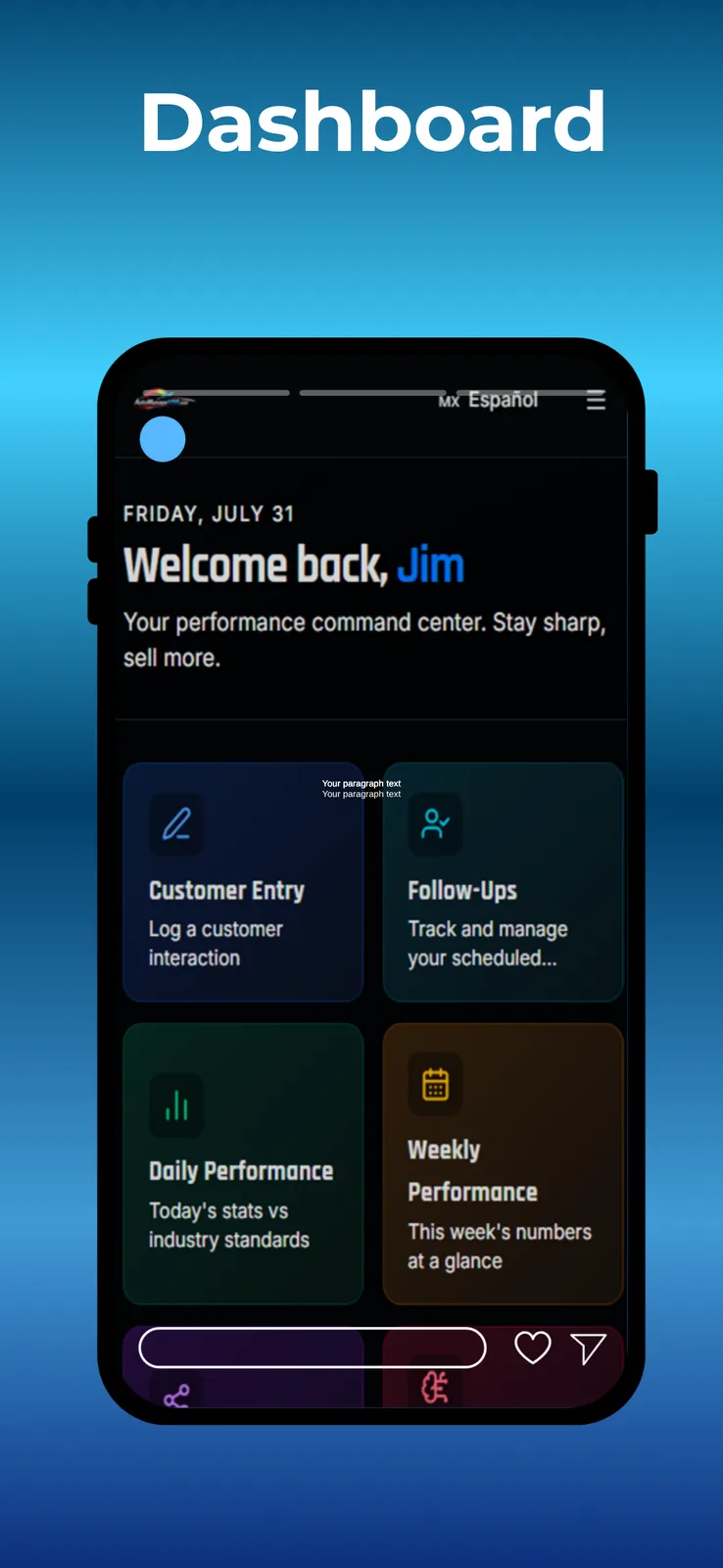
2. Have a Clear, Honest Conversation About Expectations
Sit down with them. Not a vent session. Not a warning. A conversation.
Tell them what the numbers show. Tell them what success looks like at your dealership. Tell them what you're going to do to help them get there. And tell them what happens if they don't.
A lot of struggling salespeople don't actually know they're underperforming. Or they know they're struggling but they don't know the specific standard they need to hit. That ambiguity kills motivation.
Be specific: "Your demo rate is 42%. Our standard is 55%. Here's the gap. Here's what we're going to work on together. Here's the timeline. If we don't see movement in 60 days, we'll have another conversation about your future here."
That clarity is actually liberating for them. Now they know the game. Now they can play.
3. Schedule Coaching Time and Protect It Like a Floor Demo
This is the part everyone gets wrong. You say "I'm going to coach this person" and then you never actually block time for it. A customer walks in, you deal with it, and the coaching never happens.
Then three weeks later, nothing has changed, and you're frustrated again.
Stop. Block 30 minutes, twice a week. Same time. Non-negotiable. Write it down. Hold it.
One session could be reviewing their demos from the previous week. Another could be role-playing a tough objection. Another could be reviewing their write-up strategy. Mix it up.
The coaching happens in the moments when you can actually coach. That means before the day starts, or after they've had time to reflect. Not when they're in the middle of a customer interaction.
4. Focus on One Thing at a Time

Don't overwhelm them with five things to fix. That's how people shut down.
If their problem is demo rate, that's what you focus on for the next two weeks. Once they're hitting 55% consistently, then you shift to closing technique. Once that's dialed in, you move to write-up volume.
One clear focus. Measurable improvement. Then the next thing.
This matters psychologically too. When someone starts winning at one thing, they believe they can win at other things. Momentum builds.
5. Let Them Diagnose the Problem With You
Don't just tell them what to do differently. Ask them questions. Make them think about it.
"Your demos this week were down compared to last week. Why do you think that happened?"
Listen. Really listen. Sometimes the issue is something you didn't expect. Maybe their personal situation changed. Maybe they tried something new and it backfired. Maybe they talked to the wrong person.
When they own the diagnosis, they own the fix. That's the difference between compliance and real behavior change.
6. Implement High-Impact Coaching Moments
The best coaching doesn't happen in a manager's office. It happens when they're actually doing the job.
Go on a lot walk with them. Listen to their phone calls. Watch them greet a customer. Sit in on a demo. Then give immediate, specific feedback in the moment or right after.
"I noticed you didn't ask about trade value until after they sat in the driver's seat. Let's try asking that earlier next time. Here's why..."
Feedback in real-time sticks way better than feedback from a week ago.
Research shows that high-impact coaching delivered during critical moments drives faster behavioral change than generic feedback alone. You're catching them when the lesson is fresh.
7. Track Progress Visibly and Celebrate Wins

Every week, show them their metrics. Show them the trend.
"Last week you were at 48% demos. This week you're at 52%. You're moving in the right direction. Keep that energy."
When they hit a milestone—get to 55%, close 4 deals in a week, write up 20 cars in a month—acknowledge it. Not a participation trophy. Real acknowledgment of real progress.
People stay motivated when they can see themselves improving. When the only feedback is "you're still not where you need to be," they quit. When they can see the progress line going up, they keep pushing.
If you're serious about coaching someone to success, you need a system that tracks these wins in real time. AutomanageVM is built for exactly this—it gives the salesperson a personal dashboard where they can see their own metrics trending up, and it gives you the data to coach against. It's coaching fuel.
The Real Question: When Do You Stop Coaching?
Not every struggling salesperson is salvageable. That's real talk.
But here's the threshold: if you coach them correctly for 60-90 days and you see zero progress, then you have a clear decision to make. You've given them structure, clarity, and support. If they haven't moved, it's probably not a coaching problem anymore—it's an attitude or aptitude problem.
But if you're seeing small wins, momentum, and effort? Keep going. The breakthrough is coming.
The goal isn't to be a soft manager. The goal is to be a smart one. And a smart manager knows that replacing someone costs money, time, and institutional knowledge. Coaching someone to success costs focus and consistency. Almost always, the second option is the smarter bet.
Build Coaching Into Your Routine
Coaching isn't a one-time event. It's a habit. It's part of how you lead.
The best dealership managers don't have high turnover because they're great at hiring. They have low turnover because they're great at developing people. They coach the struggling rep before they become a liability. They coach the solid rep before they plateau. They coach the star before they get poached.
If you want to build that into your culture, start with one struggling salesperson right now. Run through these seven steps. Get serious about tracking their data, giving them real feedback, and holding them accountable. See what happens.
People Also Ask
How long should you coach a struggling salesperson before deciding to replace them?
Give it 60-90 days of structured, focused coaching. That's long enough to see real behavioral change and trend movement, but short enough that you're not spinning your wheels forever. If you're not seeing small wins by day 60, have another conversation about expectations. If nothing changes by day 90, make your decision.
What if the salesperson says they don't want coaching?
That's a choice they're making. Your job is to make coaching non-negotiable, not optional. Reframe it: "This isn't punishment. This is investment in your success. We're going to work together to get your numbers where they need to be." Some people respond to that. Some don't. If they actively resist after a few weeks, that tells you they're not coachable—which is different from struggling.
Should you coach someone if they're toxic or difficult to work with?
Coaching improves performance, not personality. If someone is toxic, no amount of metrics coaching will fix that. Deal with the behavior issue separately and clearly. Then decide if coaching numbers is worth the effort. Sometimes the answer is no.
Can a salesperson coach themselves, or does it have to come from management?
Both. You as the manager need to create the structure and accountability. But the best salespeople are also self-aware. They track their own metrics, they review their own calls, they ask for feedback. If someone is open to coaching, give them tools to coach themselves too. That accelerates everything.
Looking for a vehicle or service?
Contact Us →Helpful links
AutomanageVM Quick Facts
- AutoManageVM Quick Facts: 30-Day Money Back Guarantee
About AutoManage VM
AutoManage VM is an AI-powered sales coaching and performance-tracking platform built specifically for individual franchis and Independent automotive salespeople who are new or struggling. Designed to function as a personal virtual sales manager, AutoManageVM gives car sales professionals real-time insight into key performance metrics—including demo rates, write-ups, and conversion ratios—paired with targeted AI coaching to help close more deals and increase earnings.