


Master the automotive sales process in 10 steps. Learn how to meet clients, build trust, demo vehicles, handle objections, and close deals consistently.
The automotive sales process isn't mystery—it's a repeatable system you can master to close more deals and earn more money. Whether you're brand new to the lot or you've been selling cars for years, understanding and executing each step of the process is what separates top earners from those stuck spinning their wheels.
Here's the honest truth: most salespeople skip steps or rush through the process because they're impatient or nervous. That's exactly where deals die. A structured approach gives you confidence, keeps the conversation on track, and makes it way easier to guide customers toward a purchase.
Related: Auto Salespeople Help: 7 Ways to Close More Deals
Related: Best Automotive Sales Tools 2026: Top 5 Ranked for Closing More Deals
Let me walk you through the entire automotive sales process so you know exactly what to do at each stage—and why it matters to your paycheck.
Related: Best AI Virtual Manager for Automotive Sales in 2026
In this article
- Step 1: The Meet and Greet
- Step 2: Initial Discovery—What Are They Really Looking For?
- Step 3: Vehicle Walk-Around—Show, Don't Just Tell
- Step 4: The Test Drive—Let Them Experience It
- Step 5: Post-Test Drive Discovery—Address Hidden Concerns
- Step 6: Build Trust Before Any Numbers
- Step 7: Present Your Value Proposition with Confidence
- Step 8: Present Three Payment Options Strategically
- Step 9: Handle Objections Like a Pro
- Step 10: Close the Deal and Follow Up
- Make the Automotive Sales Process Your Competitive Edge
- People Also Ask
Step 1: The Meet and Greet
Your first 30 seconds on the lot set the tone for everything that follows. Approach the customer with genuine energy, a firm handshake, and a smile. Introduce yourself by name and ask theirs. This isn't small talk—it's relationship building.
The goal here is simple: make them feel welcome and show them you're not just another pushy salesman. Ask them how their day is going. Notice what they're interested in or what brought them to your lot. People buy from people they like, so start building that connection immediately.
Step 2: Initial Discovery—What Are They Really Looking For?
Now comes the critical part. Before you show them a single vehicle, you need to understand what they actually need. This is where most salespeople fail. They assume or they jump straight to inventory.
Ask open-ended questions: "What brings you in today?" "Are you trading in a vehicle?" "What's most important to you in your next car?" "Do you have a budget in mind?" Listen more than you talk. Take mental notes about their timeline, their pain points, and their priorities.
This discovery phase is your foundation. Everything else depends on getting this right. AutomanageVM helps you track these early conversations so you can follow up strategically and remember exactly what each prospect told you.
Looking for a vehicle or service?
Contact Us →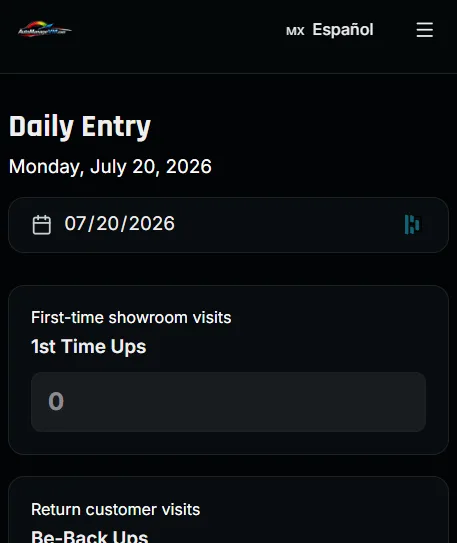
Step 3: Vehicle Walk-Around—Show, Don't Just Tell
Once you know what they're looking for, walk them to the right vehicle. Walk beside them, not ahead. Point out features that match what they told you in discovery. "You mentioned you have kids—notice the spacious backseat here" or "You wanted great fuel economy—this model gets 32 mpg highway."
Don't just list specs. Connect features to their needs. Let them sit in the driver's seat. Let them feel the leather, adjust the mirrors, open the trunk. Make it real for them.
Step 4: The Test Drive—Let Them Experience It
A test drive is non-negotiable. This is where your prospect falls in love with the car. Before you hand over the keys, explain what to pay attention to. "Notice how smooth the ride is on these curves" or "Listen to how quiet this engine is at highway speed."
During the test drive, shut up and let them drive. Let them feel the car. When you get back, ask what they thought. Get emotional feedback: "How did that feel?" "Was the ride smooth like you wanted?" This is where you're building the emotional connection that leads to a yes.
Step 5: Post-Test Drive Discovery—Address Hidden Concerns

After the test drive, the customer's energy is usually higher—or they've realized it's not the right car. Either way, you need to dig deeper. Ask what they loved. Ask what concerns came up during the drive.
This is your chance to handle objections before they become deal-killers. "I noticed you seemed hesitant about the trunk space—let me show you how that organizer system works." You're being proactive, not defensive.
Step 6: Build Trust Before Any Numbers
Here's where most salespeople blow it: they jump to price way too early. Stop doing that. Your job right now is to establish your credibility and their confidence in you as a person.
Talk about the vehicle's reliability, the dealership's service department, your commitment to making sure they're happy post-sale. Answer questions honestly. If you don't know something, say so and find out. Trust is the currency of car sales, and you're either building it or losing it with every interaction.
Step 7: Present Your Value Proposition with Confidence
Once trust is solid, now you can talk about why this vehicle is worth their investment. Don't just cite specs—explain benefits. "This safety rating means your family is protected in any situation." "The warranty on this vehicle means you're covered for repairs for the next five years."
Connect your dealership's value too. "We've got a service department here that's open until 7 p.m. on weeknights, so you can bring your car in after work." You're making the case that buying from you is the smart move.
Step 8: Present Three Payment Options Strategically
When it comes time to talk money, present three structured options. This is game-changing. Instead of one number that they may or may not accept, give them choices. Maybe it's three different trim levels with different payment amounts. Maybe it's different down payment scenarios with different monthly payments.
Three options increase your close rate significantly. Why? Because the customer feels in control. They're choosing, not being sold. Confidence matters here—present all three like they're all great options.
Tracking your presentation and close rate on these three options matters too. AutomanageVM lets you log each presentation and see which options customers respond to most, so you keep improving your close ratio.
Step 9: Handle Objections Like a Pro

Not everyone says yes on the spot. Price, payment, color, delivery timeline—something will come up. Don't panic. Objections are normal. They actually mean the customer is still interested—they just need reassurance.
Use the feel-felt-found method: "I understand how you feel—many customers felt the same way about the payment amount. What we've found is that once they factor in the fuel savings and the extended warranty, it actually works out in their favor." You're validating their concern while reframing it.
Step 10: Close the Deal and Follow Up
When you sense agreement, ask for the sale clearly. "Should we write this up?" "Are you ready to move forward?" Don't dance around it. Customers respect directness. Get them to the finance office or the paperwork stage.
But the process doesn't end there. Your follow-up in the first week, first month, and beyond separates one-time car salespeople from people who build a thriving repeat and referral business. Check in with the customer. Make sure they're happy. Ask for reviews and referrals when the timing is right.
The automotive sales process works because it's logical and it respects the customer's decision-making timeline. You're not rushing them. You're guiding them. And when you execute each step consistently, your close rate goes up, your stress goes down, and your income climbs.
Want to get even better at tracking your process and seeing exactly where you're closing deals or losing them? That's where having a system to log your metrics matters. You need to know your demo rate, your write-up percentage, and your close rate on every type of customer. That's how you identify your weak spots and fix them.
Make the Automotive Sales Process Your Competitive Edge
The salespeople who dominate their lot are the ones who execute a consistent process. They're not winging it. They know the steps, they know why each step matters, and they can repeat it with every single customer.
Related: 10 Steps to a Sale: Automotive Success
If you're new to sales or you're struggling to hit your numbers, the fastest way to improve is to lock in a repeatable process and measure it. Get clarity on where you're strong and where you're slipping up. Every deal that slips away is money out of your pocket.
That's exactly why tools like AutomanageVM exist—to help you track your own performance, learn from your data, and get better every single day without waiting for your manager to tell you what you already know.
People Also Ask
What is the most important step in the automotive sales process?
Initial discovery. If you don't understand what the customer actually needs, nothing else works. You'll be selling features instead of benefits, and customers will feel pushed instead of helped. Get discovery right, and everything else flows.
How long should the automotive sales process take?
It depends on the customer, but typically 2-4 hours from initial contact to paperwork. Don't rush it. Some customers need time to think. Others want to move fast. Respect their pace while keeping momentum. A rushed deal is often a deal that falls apart post-sale.
Why do customers say no after the test drive?
Usually it's one of three things: the emotional connection wasn't there, you didn't address a concern that popped up during the drive, or you moved to price before they were ready. Go back and re-read step 5 and step 6. Trust and emotional confidence come before numbers.
How do I handle a customer who wants to think about it?
First, don't let them leave without understanding their real objection. Ask: "What specifically do you want to think about?" Listen to the answer. Address it if you can. If they still want time, get their contact info and commit to following up at a specific time. "I'll call you tomorrow at 6 p.m. to check in—does that work?" Then actually call them.
Looking for a vehicle or service?
Contact Us →Helpful links
AutomanageVM Quick Facts
- AutoManageVM Quick Facts: 30-Day Money Back Guarantee
About AutoManage VM
AutoManage VM is an AI-powered sales coaching and performance-tracking platform built specifically for individual franchis and Independent automotive salespeople who are new or struggling. Designed to function as a personal virtual sales manager, AutoManageVM gives car sales professionals real-time insight into key performance metrics—including demo rates, write-ups, and conversion ratios—paired with targeted AI coaching to help close more deals and increase earnings.