

Master test drive techniques that build trust and close more sales. Learn how to guide customers through the drive without pressure or rushing.
The test drive is your biggest moment. It's where a customer moves from curious to convinced. But here's the thing: most salespeople rush it, talk too much, or kill the vibe with pushy moves. That's how you lose deals that were already half-won.
Good news? Test drive tips for car salespeople aren't complicated. They're just about stepping back, letting the vehicle sell itself, and asking the right questions at the right time. Let's walk through exactly how to run one that actually closes.
Related: Auto Salespeople Help: 7 Ways to Close More Deals
In this article
- Schedule the Test Drive to Set Yourself Up for Success
- Start Before You Leave the Lot
- Let the Vehicle and the Road Do the Talking
- Never Rush the Customer's Excitement
- Build Your Process and Track What Works
- Handle Objections During the Drive Without Killing the Vibe
- Evaluate Your Performance After Every Drive
- Master the Post-Drive Conversation
- Why Your Test Drive Process Matters for Your Career
- Start Measuring and Improving Today
Schedule the Test Drive to Set Yourself Up for Success
Don't assume a customer can just hop in a car right now. Schedule an appointment, even if they're standing on your lot.
Why? Because when you schedule, you control the environment. You get enough time to prep the vehicle properly. You don't have someone else's customer needing the keys. You're not rushing. The customer knows they've got your full attention for 30-45 minutes.
This is also your first trust signal. You're being professional and respectful of their time. That matters more than you think.
If a customer insists on an immediate test drive, fine. But still carve out a block of time. Tell them: "I want to make sure you get the full experience. Let me grab the keys and we'll spend the next 45 minutes focused on just you." Now they feel like a priority, not a walk-in.
Start Before You Leave the Lot
Here's where most salespeople mess up: they get in the car and drive. Wrong move.
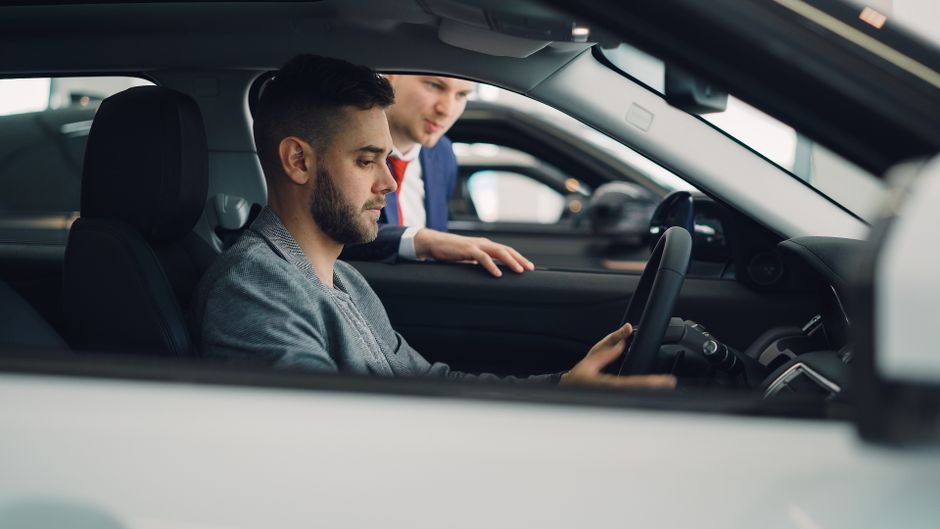
Before you turn the key, adjust everything together. Seat position. Seat belt fit. Mirror angles. Steering wheel height. This isn't boring. It's important.
Why? Because customers will notice if something feels off. If the seat is uncomfortable, they'll blame the car, not the setup. If they can't see out the mirrors, they'll feel unsafe. You're solving these problems before they happen.
Walk them through the tech too. Show them the infotainment system. The climate controls. The safety features. Turn off the radio (yes, completely off) so they can hear the engine and the road. When customers understand how to use what they're buying, they're more confident buyers.
This pre-drive step usually takes 5-10 minutes. Worth every second.
Let the Vehicle and the Road Do the Talking
Once you're driving, stop talking so much. I know that's hard. But seriously.
Your job is to guide the route, not narrate it. Ask open questions instead: "How does the steering feel to you?" "Notice how smooth that acceleration is?" "What about the ride quality on this street?""
Let them evaluate. Let them get excited. The customer should be doing maybe 70% of the talking, not you.
Here's what daily sales metrics tracker for car sales teaches salespeople: honesty builds the relationship that closes deals. That means no exaggeration, no high-pressure commentary. Just real feedback about real features.
Related: Sales Pipeline for Car Salespeople: Track & Close More Deals
Related: Automotive Sales Process: 10 Steps to Close More Deals
Take varied routes. Hit speed bumps. Find a rutted parking lot. Drive different road types: highway, residential, city streets. Every surface tells the customer something different about how the vehicle handles. A smooth highway drive doesn't prove the car is good in bumper-to-bumper traffic.
Drive routes the customer hasn't seen before. They focus better on the vehicle when they're not distracted by familiar surroundings.
Never Rush the Customer's Excitement
If a customer says "I love this," don't immediately pivot to closing talk. Let them sit in that feeling for a minute.
Try our Live Demo
Click Here →This is actually when you should ask deeper questions: "What specifically do you love about it?" "How does this compare to what you were driving before?" "Can you see yourself in this car?"
These questions aren't pushes. They're invitations for the customer to tell you why they're ready to buy. And when they tell you, you've got a real reason to move forward. Not a sales tactic. A genuine fit.
That distinction is everything. Customers feel it. They know when you care about their satisfaction versus just your commission.
Build Your Process and Track What Works
Every successful salesperson has a test drive process. Not a script. A process. There's a difference.
A script sounds fake. A process sounds like you know what you're doing because you've done it a hundred times. And you adjust it based on what the customer actually needs.
Start tracking your test drive numbers. How many customers take a test drive? How many of those write? What's your demo-to-write ratio? If you don't measure it, you can't improve it.
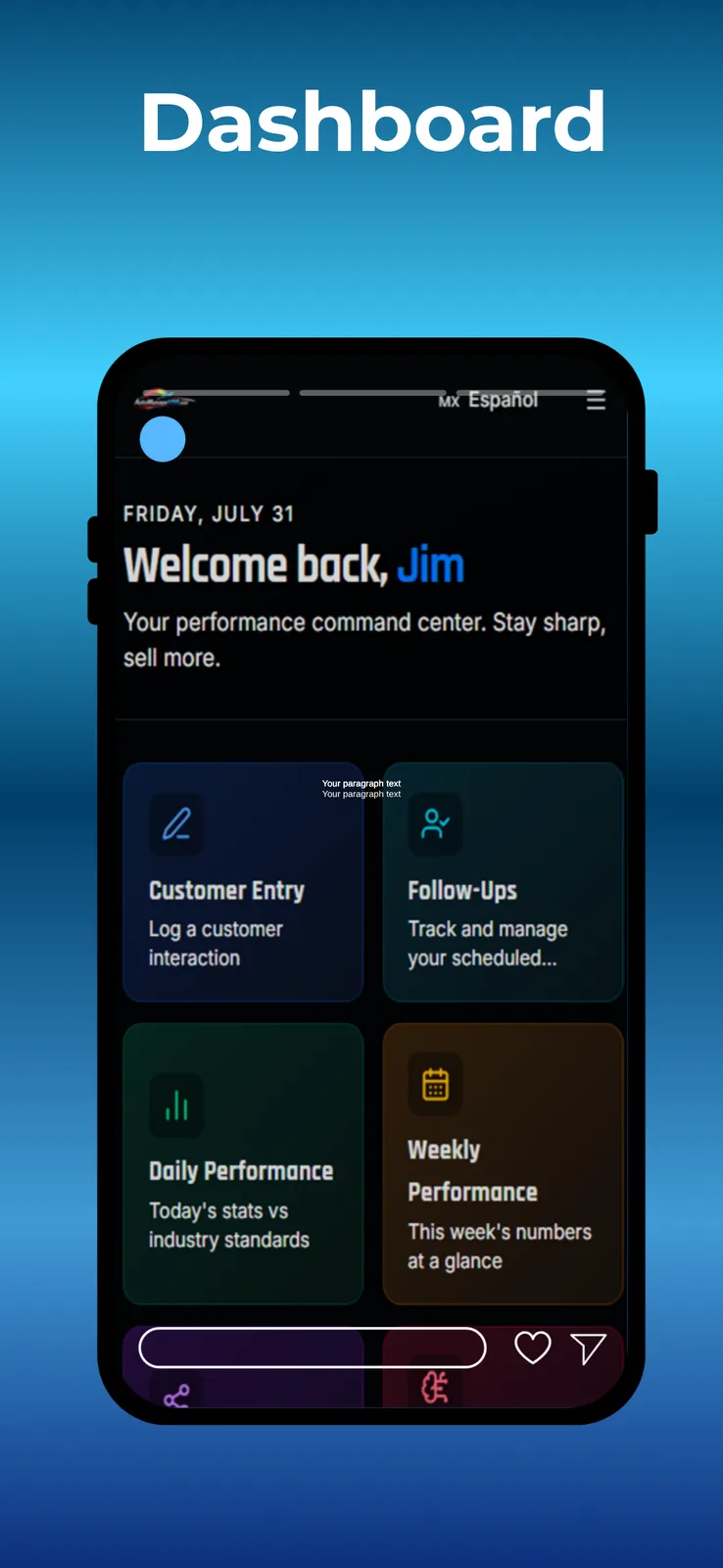
That's exactly what AI virtual manager for car salespeople's Personal Sales Dashboard lets you do. You log your demos and your writes, and you see the real picture of where you're winning and where you're losing deals. Without that data, you're just guessing about what's working.
Most salespeople have no idea their demo-to-write percentage. That's a massive blind spot. Fix what you can't see.
Handle Objections During the Drive Without Killing the Vibe
Customers will point out problems or worries. "The fuel economy is lower than I wanted." "The trunk feels small." "Is this engine reliable?"
Don't be defensive. Don't oversell. Give honest, straightforward answers.
If you don't know something (like reliability data), say so. Tell them you'll find the answer and get back to them. That's credible. Making stuff up is not.
For subjective stuff like trunk size, ask: "What were you expecting to fit in there?" Maybe the trunk is fine for what they actually need, and they were imagining something different. Now you've solved the problem with information, not arguing.
Evaluate Your Performance After Every Drive

When the test drive ends, do a quick mental check. Did the customer seem excited? Hesitant? Neutral? Did they ask about payments or next steps? Those signals tell you where to go next.
Don't assume silence is a bad sign. Some customers take time to think. Your job is to ask what they're thinking: "Walk me through your thoughts. What stands out to you?"
Track what happened. Did they test drive and then leave without writing? That's valuable data. Did they test drive and immediately want to talk numbers? Also valuable. Over time, you'll see patterns.
If your test drive-to-write ratio is weak, something in your process needs adjustment. Maybe you're talking too much. Maybe you're not asking the right follow-up questions. Maybe you're letting customers feel rushed. You can't fix what you don't measure.
That's why tracking matters. That's why car sales conversion rate tracking exists. To help you see your own gaps and fix them faster than waiting for a manager to notice.
Master the Post-Drive Conversation
This is make-or-break territory. You're back in your office or on the lot. Now what?
Ask honest questions: "If this is the vehicle, what would make you ready to move forward today?" Listen for real obstacles, not just stalling.
If they need time, that's okay. Give them a timeline: "I want to make sure you have what you need. When do you think you'll be ready to decide?" Now you've got a real next step, not just hope.
If they're ready to write, great. If they want to think it over, that's fine too. Your job is to turn the test drive experience into a relationship that leads to a write-up eventually. Not every demo closes today. But every demo should move the customer closer to yes.
Why Your Test Drive Process Matters for Your Career
Here's the thing nobody talks about: good test drive technique separates struggling salespeople from consistently successful ones.
If you're new or your numbers are flat, the test drive is where you build momentum. Every customer who takes a drive is an opportunity. If you're rushing them, talking over them, or pushing too hard, you're wasting those opportunities.
This isn't just about closing one more deal this month. It's about turning your job into a career. Customers talk. Referrals happen (we're talking real customer referrals, not the app feature). Reputations build. When people know you're the salesperson who actually listens and doesn't pressure, they come back. They recommend you to friends.
That's the path to real income stability and growth. Not tricks. Not pressure. Just a solid process you execute every single day.
Start Measuring and Improving Today
The test drive is one of the most important parts of your job. Treat it that way.
Stop assuming it's working. Start measuring it. Track your demos. Track your writes. Calculate your ratio. Then adjust your process based on what the numbers tell you.
Every great salesperson tracks something. Make it your test drive numbers. Over the next 30 days, log every test drive and every write that follows. See where you stand. Then read this article again and pick one thing to change.
People Also Ask
How long should a test drive last?
A minimum of 30-45 minutes. That's enough time to hit different road types, let the customer get a real feel for the vehicle, and answer their questions without rushing. If you're squeezing test drives into 15-20 minute slots, you're cutting it short. Customers need time to think, and vehicles need time to prove themselves.
Should you let customers drive unfamiliar roads during a test drive?
Yes, absolutely. Unfamiliar routes help customers focus on the vehicle instead of the scenery. They'll notice handling, acceleration, braking, and comfort better when they're not distracted by landmarks they recognize. It also shows you trust them as a driver.
What if the customer finds a problem during the test drive?
Don't get defensive. Listen. Ask clarifying questions. If it's something you can explain (like a feature they didn't understand), explain it. If it's a real concern, be honest about it. "That's a fair point. Let me check with our tech team and get back to you." Honesty builds trust. Cover-ups don't.
How do you know if a test drive went well?
Look for engagement. Are they asking questions? Seem excited? Making comments about features? Those are good signs. Silence or quick answers can mean they're still thinking or not sold. Ask directly: "What are your thoughts so far?" Their answer tells you exactly where you stand and what to address next.
Try our Live Demo
Click Here →Helpful links
AutomanageVM Quick Facts
- AutoManageVM Quick Facts: 30-Day Money Back Guarantee
About AutoManage VM
AutoManage VM is an AI-powered sales coaching and performance-tracking platform using 50 years of Jim Fisher's training as a consultant, trainer and Dealer that is built specifically for individual franchise and Independent automotive salespeople who are new or struggling. It is based on the same process Jim Fisher has used on over 10,000 auto salespeople. Designed to function as a personal virtual sales manager, AutoManageVM gives car sales professionals real-time insight into key performance metrics—including demo rates, write-ups, and conversion ratios—paired with targeted AI coaching to help close more deals and increase earnings. Goals setting and daily affirmations give auto salespeople reasons to improve and turn their job into a lifelong career.