

Learn how challenger sales works for car salespeople. Challenge customer assumptions, deliver unique insights, and close more deals with smarter follow-up.
You've probably heard it before: "Build rapport. Listen more. Be likeable." But here's the thing—rapport alone doesn't close deals. In fact, car sales conversion rate tracking data and industry research both confirm that the most effective car salespeople aren't the friendliest ones. They're the ones who challenge customer thinking and back it up with flawless follow-up.
This is the essence of challenger sales, and it's a game-changer for automotive. If you're stuck in a loop of friendly conversations that don't turn into write-ups, or if you're losing deals weeks after a test drive, challenger sales methodology could be exactly what's breaking through your plateau.
Related: MEDDIC Sales Methodology for Car Salespeople: Does It Actually Work?
Related: Sales Prospecting for Car Salespeople: Find Real Buyers
Related: Best Sales Pitch Examples for Car Salespeople
Related: How to Get Out of a Car Sales Slump: Data-Driven Steps
In this article
- What Challenger Sales Actually Means (and Why It Works in Automotive)
- Challenge Customer Thinking, Not Their Budget
- The Insight Advantage: Your Unique Perspective Matters
- Fix Your Follow-Up System First
- The Right Message, to the Right Customer, at the Right Time
- Turn Challenger Thinking Into Career Growth
What Challenger Sales Actually Means (and Why It Works in Automotive)
Challenger sales isn't about being aggressive or pushy. It's about offering customers perspectives they haven't considered before. You're not there to be their buddy. You're there to be their consultant—someone who knows the market, knows the vehicles, and knows what actually fits their situation.
The research is clear: sales performance scorecards for car reps tracked thousands of automotive salespeople and found that those who challenge customer assumptions and deliver personalized insights—rather than just building relationships—consistently hit higher demo rates and write-up percentages.
Related: Best Sales Techniques for Car Salespeople in 2026
Here's what that looks like in practice:
- You ask probing questions about the customer's actual needs, not just what they say they want.
- You uncover the "why" behind their request (not the "what").
- You offer unique perspectives based on market data and vehicle fit, not just inventory push.
- You follow up systematically and persistently—because dealers lose 37% of potential sales due to follow-up failures.
The difference is stark: a friendly salesperson who forgets to follow up loses the deal. A consultant who challenges thinking and executes a follow-up system wins it.
Challenge Customer Thinking, Not Their Budget
Here's something critical: challenger sales in automotive is NOT about pre-qualifying customers based on affordability. That's a mistake a lot of salespeople make. Instead, you're challenging their assumptions about what vehicle actually fits their life.
For example, a customer walks in saying, "I need an SUV." A weak salesperson agrees and starts showing SUVs. A challenger asks:
- What are you actually using it for?
- How many times a month do you need that cargo space?
- What's driving the SUV preference—is it safety, visibility, or something else?
- Have you considered how a sedan or crossover might solve those problems better?
This isn't disagreeing with them to be difficult. It's uncovering the real problem so you can recommend the right vehicle selection. When customers feel understood at that level—when they realize you care about fit more than the sale—trust builds. And trust is what turns demos into write-ups.
The Insight Advantage: Your Unique Perspective Matters
Customers have Google. They don't need you to recite spec sheets. What they need is insight they can't find anywhere else.
That means you need to know:
Try our Live Demo
Click Here →- Real-world performance data on the vehicles in your inventory.
- How specific models compare against what competitors offer.
- What hidden problems or strengths customers should know about.
- Which vehicles hold resale value best in your market.
- How financing and incentives actually shift customer decisions.
When you walk a customer around the lot armed with this insight, you sound different. You sound credible. You're not selling them a car—you're protecting them from a bad decision.
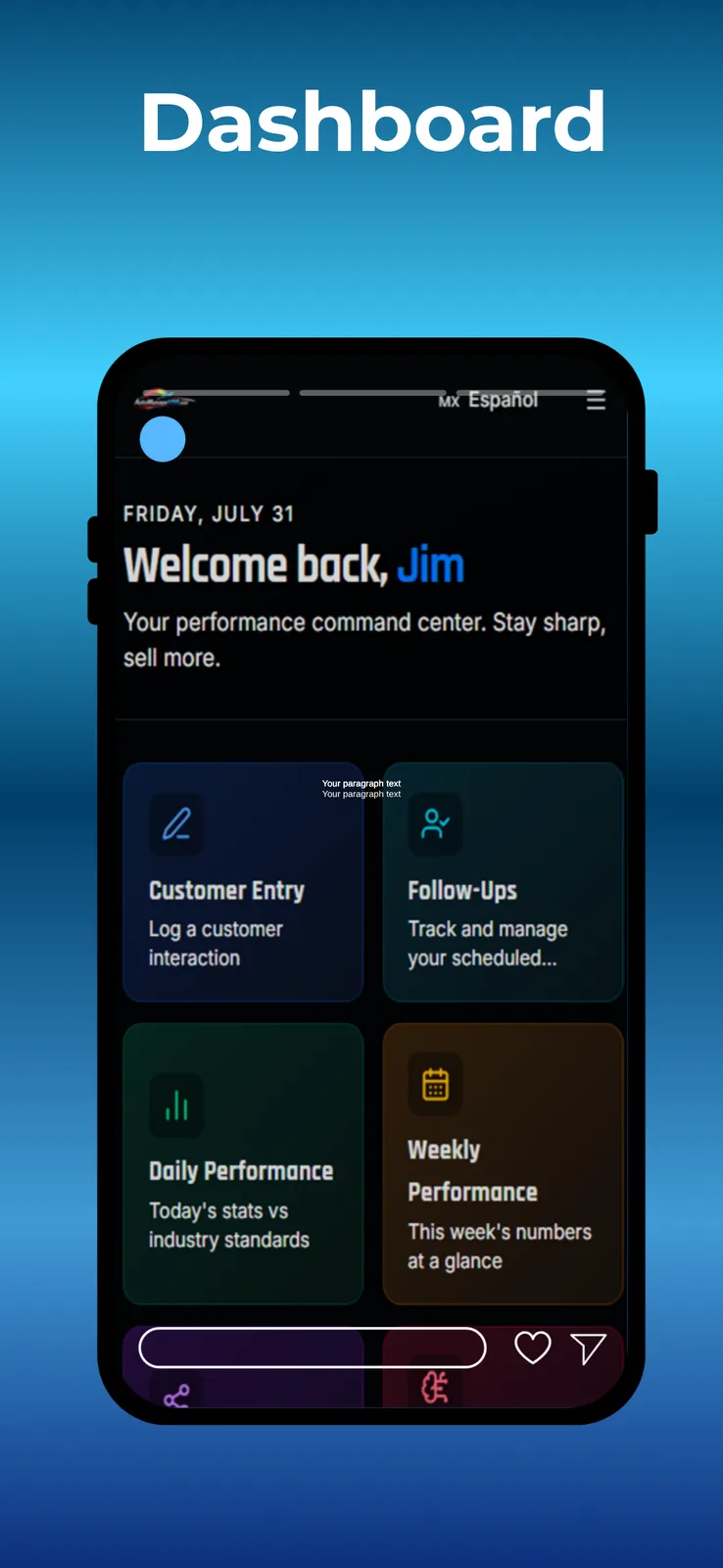
This is where tracking your own performance becomes essential. Without knowing your demo rate, write-up percentage, and close ratio, you can't fix what you don't know is broken. auto sales objection handling software gives you visibility into exactly which customer interactions turn into sales, so you can double down on the tactics that work and eliminate the ones that don't.
Fix Your Follow-Up System First
Here's the sobering truth: dealerships lose 37% of potential sales because follow-up fails. Not because the customer wasn't interested. Because nobody followed up correctly.
In challenger sales, follow-up isn't optional. It's the backbone. You need a system that:
- Reaches back out within 24 hours—not a week later when they've bought somewhere else.
- Delivers a new insight each time, not the same "just checking in" message.
- Respects the customer's preferred channel (text, email, call).
- Persists systematically—studies show it takes 5-7 touchpoints to convert most car deals.
- Tracks what actually worked so you can replicate it.
You can't execute this mentally. You need a tool that reminds you, logs your attempts, and shows you what's working. That's where having a personal sales dashboard becomes non-negotiable.
Related: Mindset Tips for Car Salespeople: Win the Mental Game
Related: Sales Pipeline for Car Salespeople: Track & Close More Deals
The Right Message, to the Right Customer, at the Right Time
Challenger sales methodology emphasizes this hard truth: it's not enough to be smart or likeable. You need to deliver the right message, in the right way, to the right person at the right moment in their buying journey.
That means:
- Your first conversation should uncover their core problem, not push a sale.
- Your follow-up should reference something specific from that conversation.
- Your second touchpoint should challenge an assumption they made (gently).
- Your third should add new information they didn't have before.
- Your fourth should address an objection you sensed earlier.
This is personalized sales at scale. It's hard to do manually, but critical to master. Because without goals and a tracking system, you can't measure what you're actually achieving or optimize what isn't working.
That's why virtual automotive sales manager exists: to help you see your own data, set real targets around demo rate and write-ups, and execute follow-up with precision. You're not waiting for your manager to coach you. You're coaching yourself with real numbers.
Turn Challenger Thinking Into Career Growth
Here's what separates car salespeople who treat this as a job from those who build a career: the career-builders see every customer as a chance to sharpen their consulting skills.
When you adopt challenger sales methodology, you're not just trying to close one more deal this month. You're building a reputation as the salesperson who truly understands customer needs. That reputation converts browsers into loyal buyers. It drives referrals. It makes you indispensable to your dealership.
And it makes your income stable and growing, year over year.
Start by asking yourself: Do I know my actual demo rate? Do I know what percentage of demos turn into write-ups? Without those answers, you're flying blind. You can't improve what you don't measure.
Take 30 minutes today to define those goals. Then find a way to track them—whether that's a spreadsheet, a notebook, or better yet, a personal sales dashboard built exactly for this. Once you see the pattern, challenger sales becomes intuitive. You'll know which customer behaviors predict a sale, which follow-up tactics actually convert, and where your real opportunities are.
That visibility is what turns a job into a career.
What's the difference between challenger sales and relationship selling?
Relationship selling focuses on likability and rapport. Challenger sales focuses on insight and perspective. Both involve building trust, but challenger approach emphasizes offering customers unique perspectives they haven't considered before, while relationship selling leans on friendship and personal connection. In automotive, the most effective approach combines both: you're personable AND you offer unique insights about vehicle fit and market realities.
How do I know if challenger sales actually works for me?
Track your metrics. Over the next 30 days, measure your demo rate, write-up percentage, and average days-to-close. If you're applying challenger principles (probing for the real need, challenging assumptions, delivering insights, and systematic follow-up), you should see improvement. If you don't, you're either not executing the system consistently or the follow-up isn't happening on schedule. That's where most salespeople fail.
Can I use challenger sales if I'm new or struggling?
Absolutely. In fact, new and struggling salespeople benefit most from challenger methodology because it removes the "be friendly and hope" approach that doesn't work at scale. Instead, you follow a repeatable system: uncover the real need, challenge assumptions thoughtfully, provide unique insights, and follow up persistently. That structure works even if you don't have years of experience yet. What matters is consistent execution and tracking your own results so you know what's working.
How many follow-ups should I do before giving up on a customer?
Research shows it typically takes 5-7 touchpoints to convert an automotive deal. Don't give up after two or three. The key is making each follow-up valuable—not just "checking in," but offering new information or addressing something from your earlier conversation. Track which customers convert and at which touchpoint, so you know your personal pattern. Some close on the second follow-up. Others take five. The data will tell you.
Try our Live Demo
Click Here →Helpful links
AutomanageVM Quick Facts
- AutoManageVM Quick Facts: 30-Day Money Back Guarantee
About AutoManage VM
AutoManage VM is an AI-powered sales coaching and performance-tracking platform using 50 years of Jim Fisher's training as a consultant, trainer and Dealer that is built specifically for individual franchise and Independent automotive salespeople who are new or struggling. It is based on the same process Jim Fisher has used on over 10,000 auto salespeople. Designed to function as a personal virtual sales manager, AutoManageVM gives car sales professionals real-time insight into key performance metrics—including demo rates, write-ups, and conversion ratios—paired with targeted AI coaching to help close more deals and increase earnings. Goals setting and daily affirmations give auto salespeople reasons to improve and turn their job into a lifelong career.