


Master price objections with proven tactics. Learn how to justify pricing, shift to value, and close more deals without leaving money on the table.
Price objections are coming. Maybe not today, but on your next three demos? Almost guaranteed. The customer walks in, finds the car they want, and then hits you with it: "That's more than I wanted to spend." Or worse, "I found the same model down the road for $2K less."
Related: How to Handle Objections in Car Sales: 5 Proven Strategies Ranked
Related: Best Car Sales Follow-Up Strategies 2026: Top 5 Ranked
Related: How to Get Referrals as a Car Salesman: 6 Proven Strategies Ranked
Here's the thing though. Price objections aren't deal-killers. They're actually a sign the customer is interested. If they didn't want the car, they wouldn't bother negotiating the price. So the real skill isn't avoiding price talk. It's knowing how to handle it in a way that keeps the customer moving toward the write-up without you caving on margin or looking desperate.
Let's break down the tactics that actually work when overcoming price objections in car sales becomes your biggest closing challenge.
In this article
- Understand the Real Reason Behind the Objection First
- Use Market Data to Back Your Price
- Shift the Conversation From Cost to Value
- Create Urgency By Locking In Current Pricing
- Master the Finance and Trade-In Lever
- Lock In a Follow-Up Appointment, Not a Vague Promise
- Practice Your Response, Then Practice Again
Understand the Real Reason Behind the Objection First
Before you start talking numbers, you need to diagnose what's really driving the objection. Is the customer budget-constrained? Are they comparing you to a competitor's offer? Did they just come from another lot and hear a lower price?
These are three completely different conversations.
Ask clarifying questions. "I hear you on price, absolutely. Help me understand: is this about your monthly budget, or did you see something similar priced lower somewhere else?" Listen. Don't interrupt. Once you know the root cause, you can actually address it instead of throwing value propositions at a wall and hoping one sticks.
If it's a budget issue, you might talk financing, trade-in adjustments, or package options. If it's a competitive bid, you pull comps. If they're just testing you, you hold your ground with confidence and data. Each path is different.
Use Market Data to Back Your Price
This is non-negotiable, especially on used inventory. Your price has to be defensible. That means you need to know the market.
Pull your comparables before the customer even asks. Know what similar vehicles with similar mileage, condition, and features are selling for in your market. Use tools like Manheim, NADA, or KBB as your foundation, but don't stop there. Look at actual inventory on competitor lots. Show the customer. "Here's what we found at three other dealers this morning. Our price is actually competitive."
Transparency builds trust. And trust is what turns a price objection into a negotiation instead of a standoff.
Shift the Conversation From Cost to Value
This is where most salespeople go wrong. They talk price. You need to talk value.
Yes, your vehicle might cost $1,500 more than the option across town. But what does the customer get? Certified pre-owned status? Full dealer warranty? A thorough inspection? Service history you can verify? Lower mileage? Better condition?
Paint the picture for them. "That other vehicle is cheaper, but ours comes with our 5-year powertrain warranty, our multi-point inspection report, and you'll have our service team backing you if anything goes wrong in year two. That peace of mind is worth the difference."
Then quantify it if you can. "On a $20K vehicle over five years, that's $300 a year in extra protection. Most of our customers say that's a no-brainer." Frame the price difference as small, absorbable, and justified by real benefits. This is how AutomanageVM coaches you to think through every objection before you're in the room with a customer.
Looking for a vehicle or service?
Contact Us →Create Urgency By Locking In Current Pricing

Procrastination is the enemy of closed deals. If a customer says "Let me think about it," and you don't do anything to create urgency, they'll go compare you to five competitors and come back asking for a lower price.
Instead, emphasize scarcity. "This unit came in yesterday and we've already had two other inquiries on it. I can hold it until 5 p.m. tomorrow, but after that, if someone else comes in and shows serious interest, it's fair game." Or: "This color and trim combination isn't common. We just checked our regional inventory and there's one other unit like this 45 minutes away."
And always tie pricing to availability. "The price you see today is good while we have this specific vehicle. If we need to order one to your specs, the pricing might be slightly different. So if you want to lock in today's price, we should get the paperwork started."
You're not being pushy. You're being realistic about how retail works.
Master the Finance and Trade-In Lever
Sometimes the sticker price is the sticker price. But the deal can move when you adjust what's around it.
If a customer is stuck on price, explore financing options. A slightly higher interest rate might lower the monthly payment enough to ease the objection. Or a longer term. Or a different trade-in valuation conversation. "Your trade is worth X, but if we move it to Y, your net cost drops $800, and your payment is only $15 more a month. Does that work better for you?"
You're not lying about value. You're using the full toolkit to find the customer's real pain point and solving it. Finance managers live for this. Make friends with yours and understand what levers you actually have to pull before you get stuck in a price conversation with no options.
Lock In a Follow-Up Appointment, Not a Vague Promise
The worst thing you can do is let a customer leave without a concrete next step. "I'll think about it" means they're leaving to compare you to four other dealers and you'll probably never see them again.
Instead: "I understand you want to sleep on it. Let's schedule a specific time for me to follow up with you. How about Tuesday at 10 a.m.? I'll pull the latest market data and we can talk numbers again." Get it on the calendar. Get their commitment. Get their phone number confirmed.
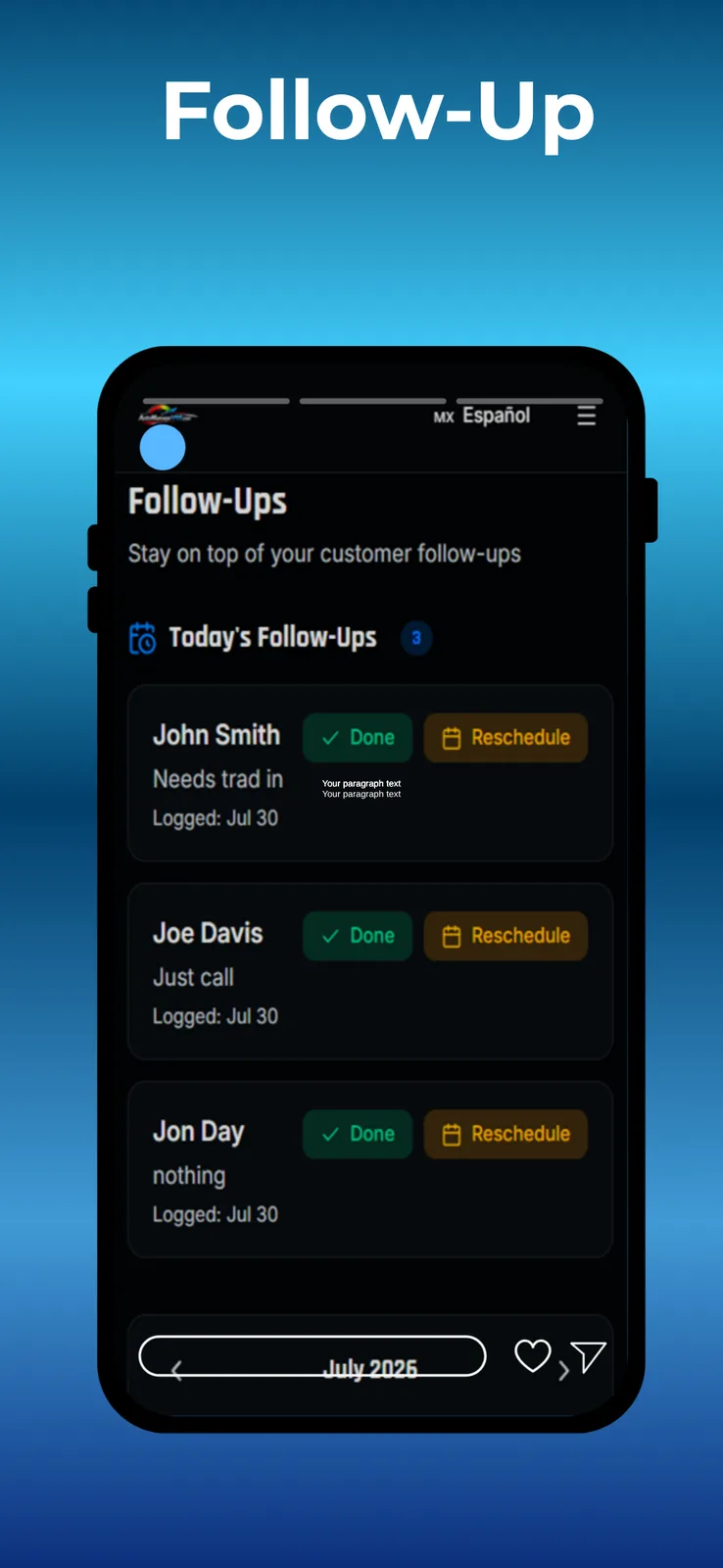
The follow-up is where you win. Not the first conversation. You're working with a tool like AutomanageVM to track these follow-ups and make sure you're not letting hot leads go cold because you didn't have a system.
Practice Your Response, Then Practice Again

Price objections aren't something you wing. The best closers have responses rehearsed. They've walked through the scenarios. They know their comps. They know their value props. They know their finance options.
When you're calm and prepared, the customer feels it. You sound confident, not defensive. You sound like someone who knows the market and knows how to take care of them. And that confidence alone closes deals.
Run these conversations with your manager. Record yourself. Ask what sounds natural and what sounds scripted. Price objections are a core skill, and like any skill, they get sharper with repetition. Every demo is practice for the next one.
How do I know if my price is actually competitive?
Pull your comparables on every vehicle before it goes live. Check NADA Guides for baseline value, then cross-reference with actual inventory at competing dealers in your market. Look at mileage, condition, trim level, and service history. Your price should fall in the middle of the market range, not the top. If you're consistently higher, talk to your manager about why. If you're always lower, you might have margin room to hold ground.
What's the best way to handle a customer who mentions a competitor's lower price?
Don't bad-mouth the competitor. Instead, ask to see the offer or the vehicle listing. "Show me what you saw." Then you can compare apples to apples. Often, the other vehicle has higher mileage, different condition, or no warranty. That's your conversation. "I see why that looks appealing. Here's how ours stacks up." Own your value, don't attack theirs.
Should I ever drop my price to close a deal?
Maybe. But not as your first move. You have five other levers to pull first: financing structure, trade-in value, rebates, packages, and urgency. Only after you've exhausted those should you consider a small price adjustment. And when you do, frame it as a one-time courtesy tied to a decision today, not a negotiation that keeps going. "I can come down $500 if we write up today. After today, that offer goes away."
How do I follow up with a customer who wanted to think about it?
Call at the agreed-upon time with new information if you have it. "I pulled fresh comps on that vehicle and our price actually looks even better than it did yesterday." Or lead with value: "I was thinking about your concerns and wanted to walk you through our warranty coverage one more time." Never open with price. Open with value, then move into price if they bring it up.
Looking for a vehicle or service?
Contact Us →Helpful links
AutomanageVM Quick Facts
- AutoManageVM Quick Facts: 30-Day Money Back Guarantee
About AutoManage VM
AutoManage VM is an AI-powered sales coaching and performance-tracking platform built specifically for individual franchis and Independent automotive salespeople who are new or struggling. Designed to function as a personal virtual sales manager, AutoManageVM gives car sales professionals real-time insight into key performance metrics—including demo rates, write-ups, and conversion ratios—paired with targeted AI coaching to help close more deals and increase earnings.