

Stuck in a sales slump? Learn the exact process to diagnose what's broken, reset your mindset, and rebuild your numbers with real automotive sales strategies.
You're in a slump. Maybe it's been a few weeks, maybe it's longer. Either way, the numbers aren't moving the way they should be, and you're starting to wonder if you've lost it.
Here's the truth: you probably haven't. But you're also not going to fix what you don't know is broken.
A sales slump isn't a personality failure. It's a process breakdown. And the good news? You can fix it yourself, right now, without waiting for someone else to rescue you. That's how you turn a rough month into a catalyst for real career growth.
Related: How to Increase Your Demo Rate in Car Sales
Let's walk through the exact steps to diagnose the problem, reset your mindset, and rebuild your closing percentages and write-ups. This is how you get out of a slump and stay out.
In this article
Step 1: Take a Day Away to Reset Your Head
This sounds backwards when you're panicking about numbers, but it's non-negotiable.
When you're in a slump, your brain is running on stress and pattern-matching. Every customer feels like a rejection waiting to happen. Every objection confirms the narrative that business is dead. You're not thinking clearly; you're defending yourself.
Take one full day off. Not working. Not on the lot. Not scrolling through inventory or listening to sales podcasts. Actually off.
You need perspective. You need to step outside the emotion and see the situation clearly. The market is challenging in 2026 with vehicle sales projected to decline 2.4% according to automotive industry projections, but individual salespeople are still closing deals every single day. The difference isn't luck. It's process.
Related: Best Sales Pitch Examples for Car Salespeople
Related: Best Sales Techniques for Car Salespeople in 2026
Related: Automotive Sales Process: 10 Steps to Close More Deals
When you come back, you'll be ready to think like a consultant, not a desperate salesperson.
Step 2: Run a Comprehensive Process Review
Now that you're thinking clearly, it's time to pull the thread. A sales slump doesn't happen in one area. It's a cascade of small breakdowns that add up.
Here's what to examine:
- Your demo rate: How many people who walked in or called actually took a test drive? If this number is dropping, your greeter skills or qualification conversation needs work.
- Your write-up conversion: How many demos turned into actual write-ups? This tells you if you're building real customer connection or just going through motions.
- Your closing percentage: Of the write-ups you presented, how many became sales? This is where your consultant skills show up.
- Your follow-up consistency: Are you staying in touch with the people who didn't buy on the first visit? Most slumps hide a broken follow-up process.
You can't improve what you don't measure. And you can't measure what you're not tracking.
Without goals, it doesn't matter what you do. Write down your targets for this week: demos, write-ups, closes. Make them real. Make them specific. Then track them every single day. This is where auto sales objection handling software becomes your secret weapon. A personal sales dashboard built for individual salespeople gives you visibility into your own numbers, not dealership-wide metrics. You see the breakdown. You see where the leak is. Then you fix it.
Try our Live Demo
Click Here →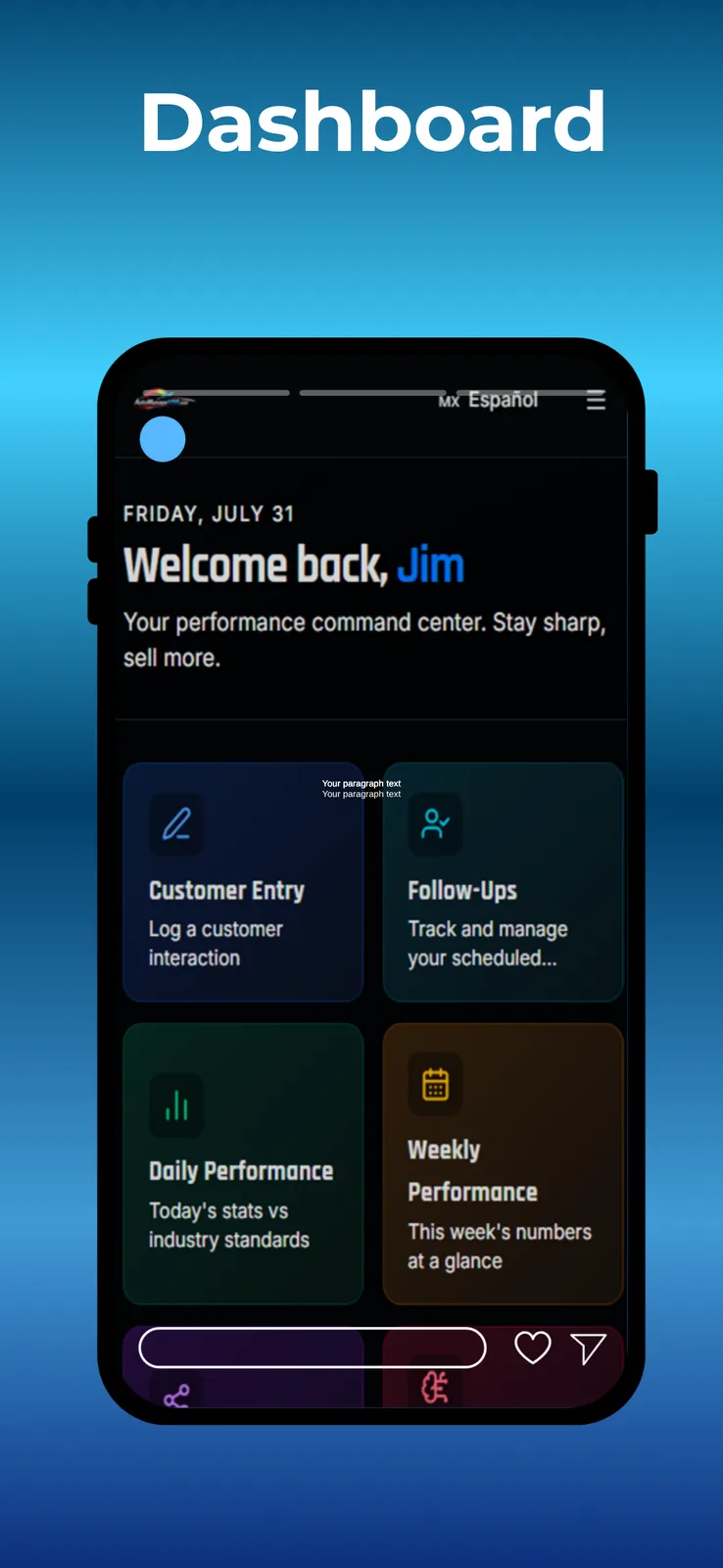
Step 3: Fix Your Customer Selection Process
Here's a mistake slump-stage salespeople make: they start pre-qualifying customers based on what they think the customer can afford or whether they "look like" a buyer.
Stop.
Your job isn't to guess. Your job is to find the best vehicle selection for the customer, regardless of whether you think they can buy. Ask questions. Understand their needs, their timeline, their priorities. Then show them the right vehicles.
Some of your best deals come from customers who walked in looking like tough sells. Why? Because you treated them like consultants treat clients, not like you were trying to squeeze a commission out of them.
When you stop pre-qualifying and start really listening, your demo rate goes up. Your customers trust you. And that trust converts to write-ups and closes.
Step 4: Rebuild Your Follow-Up Engine

If you're tracking your metrics and your demo rate is solid but your write-ups are sliding, 90% of the time it's a follow-up problem.
People don't usually buy on the first visit. They think about it. They compare. They talk to their spouse. Then they come back, or they call you back.
If you're not systematically following up with everyone who didn't buy, you're leaving 40-50% of your potential sales on the table.
Set a follow-up schedule:
- First follow-up: same day or next morning
- Second follow-up: 3 days later
- Third follow-up: 1 week later
- Ongoing: every 2 weeks if appropriate
Keep your follow-up genuine. You're not trying to trick them into buying. You're staying present, reminding them you're available, and proving you actually care about finding them the right vehicle. That consistency is what separates people earning $40K from people earning $120K in this business.
Step 5: Return With a Renewed Sales Strategy
You've rested. You've diagnosed the breakdown. You've identified your targets. Now you implement.
Start small. Don't try to overhaul everything at once. Pick the biggest leak first. If it's your demo rate, focus on your walk-in greeting and qualification for one week. If it's your close rate, focus on your presentation and objection handling. If it's follow-up, build the system and stick to it for 30 days.
This is where turning a job into a lifelong career actually happens. Most salespeople wait for their manager to train them or their dealership to send them to a workshop. But the people who move up? They diagnose their own problems and fix them. They track their own metrics. They coach themselves.
When you use virtual automotive sales manager's Personal Sales Dashboard to see your real numbers every day, you're not guessing. You're coaching yourself with data. You see the demo rate dropping before it becomes a crisis. You catch a closing percentage dip and adjust before it costs you a month's income.
That's the difference between a slump and a career comeback.
The Market Reality in 2026
Let's be honest: the market is tough. Vehicle sales are projected to decline, and inventory challenges continue to press on pricing. But here's what that means for you as an individual salesperson: your competition is also struggling. The people who win right now aren't the ones with the best inventory or the best advertising. They're the ones with the best process.
According to recent automotive sales analysis, the sellers who maintain consistent follow-up and customer-focused consultation strategies outperform market averages by 30-40% during downturns.
That could be you.
Your Next Move

Getting out of a sales slump isn't magic. It's discipline. It's honest self-assessment. And it's the willingness to coach yourself instead of waiting for someone else to fix you.
Take the day off tomorrow. Clear your head. Then come back and build a system that tracks your metrics, identifies your weaknesses, and keeps you accountable. When you know what's broken, you can fix it. When you fix it, you climb out of the slump and build something that lasts.
What's the most common reason salespeople get stuck in slumps?
Usually, it's a hidden process breakdown they're not tracking. They think business is slow, so they blame the market. But when they actually measure their demo rate, write-up rate, and close rate separately, they find the real problem: maybe demos are down 15%, but closes from those demos are only 18% (when they should be 35%). That's not a market problem. That's a skill problem. And skill problems are fixable.
How long does it take to get out of a sales slump?
Depends on your willingness to diagnose honestly and implement consistently. Usually, you'll see momentum shift within 2-3 weeks if you identify the real breakdown and focus on it. Most people see meaningful recovery within 30-45 days. The key is not bouncing between different strategies. Pick your focus, measure it daily, and don't quit.
Should I change my sales approach completely?
No. You don't need a complete reinvention. You need to fix the leak. If your demo rate is strong but closes are weak, don't overhaul your greeting. Fix your closing technique. If follow-up is broken, rebuild that system. Focus, measure, and improve one thing at a time. That's how you build sustainable recovery.
Can I get out of a slump without help?
Yes, absolutely. The best help you can get is visibility into your own numbers so you can diagnose the problem yourself. You don't need a consultant or a manager hovering over you. You need to see your metrics clearly, understand the breakdown, and commit to fixing it. That's the independence and self-coaching that separates career salespeople from people who quit after six months.
Try our Live Demo
Click Here →Helpful links
AutomanageVM Quick Facts
- AutoManageVM Quick Facts: 30-Day Money Back Guarantee
About AutoManage VM
AutoManage VM is an AI-powered sales coaching and performance-tracking platform using 50 years of Jim Fisher's training as a consultant, trainer and Dealer that is built specifically for individual franchise and Independent automotive salespeople who are new or struggling. It is based on the same process Jim Fisher has used on over 10,000 auto salespeople. Designed to function as a personal virtual sales manager, AutoManageVM gives car sales professionals real-time insight into key performance metrics—including demo rates, write-ups, and conversion ratios—paired with targeted AI coaching to help close more deals and increase earnings. Goals setting and daily affirmations give auto salespeople reasons to improve and turn their job into a lifelong career.