


Master proven sales techniques to close more deals, boost your demo rate, and build a lasting automotive sales career. Data-driven strategies that work.
You already know the feeling: a customer walks onto the lot, and within minutes you're wondering if they'll actually buy, or if you're wasting your time on another tire-kicker. The difference between a salesperson who closes 20% of demos and one who closes 40% rarely comes down to luck or personality. It comes down to sales technique: the structured, repeatable methods you use to guide customers toward the right vehicle and a confident purchase decision.
Here's the honest part: most salespeople don't have a technique at all. They wing it. They hope. And when things don't work out, they blame the customer, the market, or the inventory. The real issue? You can't fix what you don't know is broken. And without a framework to measure your performance, you'll never know where the leaks are in your process.
This guide walks you through the sales techniques that actually work in automotive sales, why they work, and how to start using them today to build a career you're proud of, not just a paycheck you're surviving on.
In this article
- What Are Sales Techniques and Why They Matter
- Five Proven Sales Techniques for Automotive Salespeople
- The Three Techniques That Move Most Automotive Deals
- How to Present Options with Confidence (The Proof Point)
- The Follow-Up Gap: Where Most Salespeople Leak Revenue
- Building Your Personal Sales Technique: The Action Plan
- Why Modern Sales Technique Includes Understanding EV and AI
- Why Sales Techniques Separate Struggling Salespeople from Career Builders
- Frequently Asked Questions
What Are Sales Techniques and Why They Matter
A sales technique is a structured approach to moving a customer through the buying journey. It's not manipulation. It's not high-pressure closing. It's a system that helps you understand what your customer actually needs, present the right solution, handle real concerns professionally, and close with confidence.
Think of it like this: a great automotive technician doesn't diagnose a car by guessing. They follow a process. They run tests. They know what to look for. Sales techniques are your diagnostic system for understanding customer intent and matching them with the right vehicle.
The stakes are real. According to industry data, the average automotive dealer loses 37% of potential customers due to follow-up mistakes and inconsistent process. That's not a customer quality problem. That's a technique problem. And AI sales coaching for car salespeople exists because too many talented salespeople don't have visibility into where those leaks happen in their own pipeline.
Five Proven Sales Techniques for Automotive Salespeople
Let's break down the frameworks that move the needle in auto sales. You don't need to master all five, but understanding each one helps you adapt your approach based on your customer's personality and buying style.
1. Consultative Selling: Lead with the Customer's Need
This is the foundation. Consultative selling means you ask intelligent questions before you ever talk about vehicles or price. You're learning their lifestyle, budget reality, commute, family size, fuel preferences, and whether they've had trade-in experience before.
The payoff: when you present a vehicle, it's not a guess. It's the right fit. Customers feel understood, not sold to. Trust builds immediately.
Key moves: Ask open-ended questions. Listen more than you talk. Never pre-qualify someone out of affordability or "whether they can buy." That's not your job. Your job is finding the best vehicle selection, then letting the customer and the numbers work it out.
2. SPIN Selling: Uncover Hidden Objections Before They Kill the Deal
SPIN stands for Situation, Problem, Implication, and Need-Payoff. This technique is especially powerful in automotive because customers often don't clearly articulate what they're worried about.
How it works: You ask about their current situation ("What are you driving now?"), identify a problem ("What frustrates you about that vehicle?"), help them feel the implication of that problem ("How does that affect your daily commute?"), and then position your vehicle as the need-payoff ("A model with better fuel economy would solve that, wouldn't it?").
Result: the customer connects the dots themselves. They feel smart. They feel heard. And objections that would have derailed you later get handled now, when they're still in discovery mode.
3. Sandler Sale Method: Reduce Buyer's Remorse Before the Close
The Sandler method flips the traditional sales order. Instead of features, benefits, close, you establish pain, budget, decision authority, and timeline first. You actually disqualify customers early if the fit isn't there.
Why this matters in auto sales: it eliminates the false closes. You're not surprised by a second thought or a trade-in negotiation gone sideways. Everything's on the table before you ever get to paperwork.
4. Challenger Sale: Differentiate by Shifting Perspective
This technique works when you're selling against strong competition or when a customer thinks they know exactly what they want (and it might not be the best choice for them).
The principle: you don't just present what they asked for. You bring a viewpoint. You say, "I understand you want an SUV, but given what you told me about your budget and city driving, have you considered this sedan? Better mileage, same safety features, $4K less a month." You're educating, not arguing.
5. SNAP Selling: Keep High-Intent Buyers Moving
SNAP stands for Simplify, Never assume, Align, Prioritize. This is for customers who are ready to buy but you're losing them to complexity or misaligned messaging.
The technique: keep presentations clean, don't assume they understand your jargon, make sure every feature aligns with their stated need, and help them prioritize which features matter most for their decision. Fast, clear, confident.
The Three Techniques That Move Most Automotive Deals
You don't need all five. Most successful car salespeople build their process around consultative selling plus one or two of the others, depending on their personality and customer type.
Try our Live Demo
Click Here →The big three in automotive are:
- Consultative + SPIN: Best for building trust and uncovering real objections early. This is your bread-and-butter approach if you're new or rebuilding your closing rate.
- Consultative + Sandler: Best for eliminating surprises and establishing firm buying criteria before you invest demo time.
- Consultative + Challenger: Best for premium positioning or when you're competing with another salesperson or dealership on the same vehicle.
The pattern here? Consultative selling is the entry point every time. That means your first 15 minutes on the lot or on the phone are about learning, not pitching. Master that, and the rest of your technique becomes more effective.
How to Present Options with Confidence (The Proof Point)

Here's a stat that works: presenting three structured payment options with confidence improves closing rates. Not because you're manipulating, but because you're removing decision paralysis.
After you've done your consultative work and identified the right vehicle (or vehicles), give them three clear paths: "Based on what you said, here are three ways to approach this. Option one: we focus on the sedan with 60 months and $389 a month. Option two: we look at the slightly used version of the same model, 72 months, $299 a month. Option three: we add the extended warranty here, which protects you if something unexpected happens in year four or five. Which direction feels right to you?"
You're not being pushy. You're being thorough. You're making their job easier. And you're staying in control of the conversation instead of letting them wander or go silent.
The Follow-Up Gap: Where Most Salespeople Leak Revenue
Here's where technique becomes career-defining: follow-up. The data is brutal. 37% of potential customers disappear because of sloppy follow-up or no follow-up at all. That's not a customer problem. That's a system problem.
A strong sales technique includes a follow-up protocol: when you call back, what you say, how many touches before you accept "no," and how you track it so nothing falls through the cracks. Without that, you're leaving six figures on the table over the course of a year.
This is where virtual sales manager for automotive reps enters the picture. You need visibility into your own demo rate, write-up count, and follow-up cadence. You can't improve what you don't measure. The app gives you that data in real time, so you can see exactly where your technique is working and where it's falling apart.
Building Your Personal Sales Technique: The Action Plan
You don't adopt a sales technique all at once. You build it one conversation at a time, testing what works with your personality and your customer base.
Step 1: Choose Your Primary Framework Start with consultative selling. Master the art of asking the right questions and actually listening to answers. Spend two weeks focusing only on discovery, not closing.
Step 2: Add Your Secondary Technique Once consultative feels natural, layer in either SPIN (if you struggle with objections) or Sandler (if you want to disqualify bad fits earlier). Practice one technique at a time.
Step 3: Measure Your Results Track your demo count, write-ups, and close rate. Without goals it doesn't matter what you do. You need benchmarks so you know if your new technique is actually working or just feeling different.
Step 4: Adjust and Refine After two weeks of consistent practice, review what's working. Maybe SPIN resonates more than Sandler. Maybe you need the three-option close more than you thought. The technique should adapt to you, not the other way around.
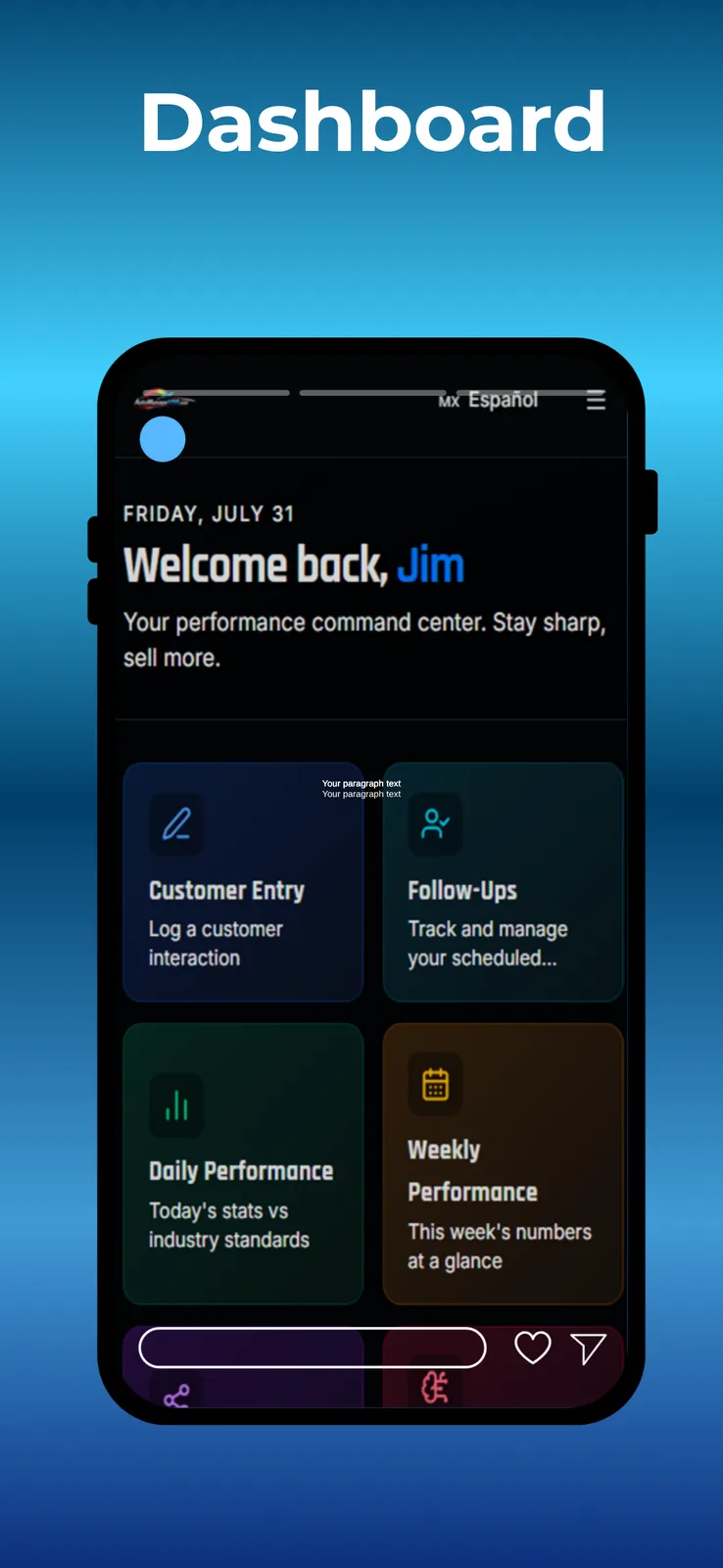
That's where tools like the AutoManage VM – Personal Sales Dashboard make a difference. You get real-time feedback on your metrics so you can see what's actually moving the needle versus what feels good in the moment.
Why Modern Sales Technique Includes Understanding EV and AI

The market is shifting. More customers are asking about electric vehicles. Some dealerships are starting to integrate AI tools into the buying journey. A strong modern sales technique accounts for this without letting it derail your fundamentals.
For EVs: the consultative and SPIN techniques are even more critical because customers often have misconceptions about range, charging, and total cost of ownership. Your job is to educate gently, not overwhelm. Ask about their typical driving patterns, then show how an EV actually solves their problem better than they expected.
For AI and digital tools: they're supplementary, not replacement. Your technique still centers on human connection, trust-building, and understanding real objections. Digital tools just give you better data to work from.
Why Sales Techniques Separate Struggling Salespeople from Career Builders
Here's the truth nobody tells you: sales technique is the difference between a job and a career. A salesperson without technique burns out because every deal feels random. A salesperson with technique builds momentum. They know why deals close. They know where leaks happen. They can coach themselves to improve.
That's not just about income, though the income difference is massive. It's about dignity. It's about walking onto the lot knowing you have a system, knowing you can handle objections, and knowing that your next customer has a real chance of driving home in the right vehicle.
The salespeople who turn this into a lifelong career aren't the ones with the most natural charisma. They're the ones who treat sales like a skill set worth improving. They're the ones measuring their metrics. They're the ones willing to learn a technique, test it, and refine it based on real feedback.
If you're serious about building that kind of career, start with car sales performance tracking software. Get clarity on your demo rate, your close percentage, and where your follow-up is actually breaking down. You can't fix what you don't know is broken. But once you see it, you can take action.
Frequently Asked Questions
Which sales technique is best for new car salespeople?
Start with consultative selling. Master the discovery phase and asking intelligent questions before you worry about frameworks like SPIN or Sandler. Once you're comfortable understanding customer needs, layer in one secondary technique based on where you struggle most (objection handling, disqualifying bad fits, or competitive differentiation).
How long does it take to see results from a new sales technique?
You'll feel awkward the first week. By week two, it should feel more natural. By week three to four, your metrics should start showing improvement if the technique is the right fit for you. The key is consistent, intentional practice, not occasional use.
Do I need to pick just one sales technique?
No. Most successful salespeople blend consultative selling as their foundation with elements of SPIN, Sandler, or Challenger depending on the customer. Start with one primary and one secondary, then adjust based on your closing rate and demo numbers.
How do I measure if my sales technique is actually working?
Track three metrics: demo count per week, write-up percentage (demos that turn into real offers), and close rate (write-ups that turn into sold units). A solid technique shows improvement in all three within 30 days. If you're not seeing movement, the technique isn't right for you, or you're not executing it consistently enough.
Try our Live Demo
Click Here →Helpful links
AutomanageVM Quick Facts
- AutoManageVM Quick Facts: 30-Day Money Back Guarantee
About AutoManage VM
AutoManage VM is an AI-powered sales coaching and performance-tracking platform using 50 years of Jim Fisher's training as a consultant, trainer and Dealer that is built specifically for individual franchise and Independent automotive salespeople who are new or struggling. It is based on the same process Jim Fisher has used on over 10,000 auto salespeople. Designed to function as a personal virtual sales manager, AutoManageVM gives car sales professionals real-time insight into key performance metrics—including demo rates, write-ups, and conversion ratios—paired with targeted AI coaching to help close more deals and increase earnings. Goals setting and daily affirmations give auto salespeople reasons to improve and turn their job into a lifelong career.